
Ah, Secondary 4 Math. In today's competitive educational scene, many parents in Singapore are hunting for effective ways to enhance their children's grasp of mathematical concepts, from basic arithmetic to advanced problem-solving. Creating a strong foundation early on can significantly elevate confidence and academic performance, aiding students conquer school exams and real-world applications with ease. For those investigating options like secondary 4 math it's vital to prioritize on programs that emphasize personalized learning and experienced instruction. This method not only resolves individual weaknesses but also cultivates a love for the subject, contributing to long-term success in STEM-related fields and beyond.. The year that looms large in every Singaporean student's mind, kanchiong parents included! It's the gateway to JC, poly, and ultimately, your child's future lah. Many students think they can chiong their way through by simply memorizing formulas and exam questions. But let's be real, that's like trying to build a skyscraper on quicksand – shaky and destined to crumble.
Memorization might seem like a shortcut, especially when the pressure is on. You see your child diligently copying down solutions, reciting formulas like a mantra. It feels productive, right? But here's the truth: Secondary 4 Math isn't just about regurgitating information; it's about understanding the underlying concepts. In the rigorous world of Singapore's education system, parents are progressively intent on arming their children with the competencies needed to succeed in intensive math syllabi, encompassing PSLE, O-Level, and A-Level studies. Identifying early indicators of challenge in subjects like algebra, geometry, or calculus can create a world of difference in fostering resilience and proficiency over advanced problem-solving. Exploring reliable Singapore math tuition options can deliver personalized assistance that corresponds with the national syllabus, guaranteeing students gain the boost they want for top exam scores. By focusing on interactive sessions and regular practice, families can help their kids not only meet but surpass academic expectations, clearing the way for future opportunities in competitive fields.. It's about building a solid foundation for future success, especially with AI breathing down our necks – AI thrives on mathematical principles, so your child needs to be able to understand the math behind all the AI hype.
Think of it this way: memorizing is like knowing the lyrics to a song without understanding the music. You can sing along, but you can't create your own tune. And in the real world, especially in today's tech-driven landscape, we need innovators, problem-solvers, and creators, not just parrots.
So, how to excel in Singapore Secondary 4 Math? It's about shifting the focus from rote learning to genuine understanding. It's about equipping your child with the tools to tackle any problem, even those they've never seen before. In the city-state's rigorous education structure, parents fulfill a vital function in leading their kids through key assessments that form educational futures, from the Primary School Leaving Examination (PSLE) which tests foundational skills in areas like numeracy and scientific studies, to the GCE O-Level exams emphasizing on intermediate expertise in multiple subjects. As students progress, the GCE A-Level examinations demand more profound critical skills and topic mastery, frequently influencing higher education placements and occupational trajectories. To remain knowledgeable on all elements of these countrywide exams, parents should check out authorized materials on Singapore test papers provided by the Singapore Examinations and Assessment Board (SEAB). This guarantees availability to the newest syllabi, test timetables, enrollment details, and guidelines that correspond with Ministry of Education standards. Consistently consulting SEAB can help parents prepare successfully, reduce uncertainties, and bolster their children in attaining optimal performance amid the competitive landscape.. This is critical for doing well in school exams!
Effective Study Techniques for Sec 4 Math
Okay, so memorization is not the golden ticket. What are the effective study techniques for Sec 4 Math then? Here are a few powerful strategies to help your child truly grasp the concepts and boost their confidence:
Math topics are interconnected. Concept mapping helps students visually represent these connections, making it easier to see the bigger picture. Encourage your child to create diagrams linking different concepts, formulas, and theorems. This is a fantastic way to reinforce understanding and improve retention.
Instead of mindlessly solving hundreds of problems, focus on understanding the why behind each step. Encourage your child to analyze their mistakes, identify areas of weakness, and seek clarification when needed. Ten well-understood problems are worth more than a hundred mindlessly solved ones.
One of the best ways to solidify understanding is to teach someone else. Encourage your child to explain concepts to their classmates or even to you! This forces them to articulate their knowledge and identify any gaps in their understanding. Plus, helping others builds confidence and reinforces learning.
If your child is struggling with a particular topic, don't wait until the last minute to seek help. Encourage them to ask their teacher for clarification, join a study group, or consider engaging a qualified math tutor. Early intervention can prevent small problems from snowballing into major obstacles. Remember, there are many resources available to support your child's learning journey.
Subtopics for Sec 4 Math Success
Active recall involves retrieving information from memory without looking at your notes. This is a much more effective way to learn than passively rereading material. Encourage your child to use flashcards, practice questions, and self-testing techniques to actively recall information and reinforce their understanding.
Spaced repetition involves reviewing material at increasing intervals over time. This technique helps to transfer information from short-term to long-term memory, making it easier to recall later. Encourage your child to schedule regular review sessions, focusing on topics they find challenging.
Fun fact: Did you know that the concept of zero, so crucial in mathematics, wasn't widely accepted until the 7th century? Imagine trying to do algebra without zero! Siao liao!
Remember, parents, supporting your child's mathematical journey isn't just about pushing them to memorize formulas. It's about fostering a love of learning, encouraging critical thinking, and equipping them with the skills they need to succeed in a rapidly changing world. Jia you! You can do it! And so can your child!
Memorized information is often more susceptible to forgetting, especially under pressure during examinations. Without a solid understanding, recalling the correct formula or procedure can be challenging. Conceptual learning promotes long-term retention and easier retrieval of information.
Memorizing formulas and procedures without understanding the underlying concepts can hinder problem-solving abilities. Students may struggle to apply learned methods to unfamiliar questions or variations. A conceptual understanding allows for flexible application and adaptation to diverse problem types.
Sole reliance on memorization often neglects the development of critical thinking and analytical skills. Students may find it difficult to break down complex problems into smaller, manageable parts. Analytical skills are crucial for identifying patterns, relationships, and the most efficient solution strategies.
Alright, parents, let's talk about Sec 4 Math. Your child's future – their university choices, their career path – it all hinges on this, leh! In this age of AI, mastering mathematics isn't just about acing exams; it's about equipping them with the analytical skills to thrive in a rapidly changing world. But here's the thing: memorizing formulas alone? That's like building a house on sand. It looks good at first, but one strong wave (read: a tricky exam question), and the whole thing kena washed away!
Imagine this: your child diligently memorizes the quadratic formula. They can recite it in their sleep! But then, the exam throws a curveball. Instead of a straightforward equation, the problem is presented as a word problem, cleverly disguised with real-world scenarios. Suddenly, that perfectly memorized formula is about as useful as a calculator without batteries. The problem isn't the formula itself, but the lack of understanding *when* and *how* to apply it. This is one of the biggest pitfalls of relying solely on memorization in Sec 4 Math.
Let's illustrate with another example. Think about trigonometry. Your child memorizes sin, cos, tan, and all the associated identities. Great! But what happens when the diagram is rotated, or the question subtly changes the given information? Suddenly, they're staring blankly at the paper, wondering where all that hard-earned knowledge went. This is because rote memorization doesn't foster true understanding. In Singapore's bilingual education framework, where fluency in Chinese is essential for academic excellence, parents frequently look for methods to support their children grasp the tongue's subtleties, from vocabulary and comprehension to essay crafting and speaking skills. With exams like the PSLE and O-Levels imposing high expectations, timely intervention can prevent typical pitfalls such as weak grammar or limited interaction to traditional contexts that enrich education. In an time where lifelong education is crucial for occupational advancement and individual development, prestigious universities worldwide are dismantling barriers by offering a wealth of free online courses that cover wide-ranging subjects from informatics technology and business to liberal arts and wellness sciences. These programs permit learners of all experiences to utilize top-notch sessions, tasks, and tools without the monetary load of standard enrollment, frequently through platforms that offer flexible pacing and interactive elements. Discovering online universities free courses unlocks doors to renowned schools' expertise, allowing self-motivated people to improve at no cost and secure qualifications that boost CVs. By making high-level instruction openly available online, such offerings encourage global fairness, strengthen underserved populations, and nurture advancement, demonstrating that quality knowledge is increasingly just a click away for anybody with online availability.. For families aiming to elevate performance, delving into Singapore Chinese tuition resources delivers insights into organized programs that match with the MOE syllabus and cultivate bilingual confidence. This targeted guidance not only improves exam preparedness but also cultivates a greater respect for the language, unlocking doors to cultural roots and future career edges in a diverse community.. It doesn't teach students to think critically, to analyze problems, and to adapt their knowledge to unfamiliar situations.
Fun Fact: Did you know that the word "algebra" comes from the Arabic word "al-jabr," meaning "the reunion of broken parts"? It's a fitting name, considering how algebra helps us solve problems by breaking them down into smaller, manageable pieces!
So, what's the solution? How do we help our children truly excel in Singapore Secondary 4 Math? It's all about shifting the focus from memorization to understanding. Here's how:
Forget the endless rote learning. We need to cultivate a deeper understanding. Here's the real deal on how to excel in Singapore Secondary 4 Math:
This is the golden rule! Don't just stick to the textbook examples. Seek out different types of questions from assessment books, past year papers, and even online resources. The more varied the problems, the better your child will be at recognizing patterns, applying concepts, and adapting to new situations. Think of it as building a robust mental toolkit, filled with all sorts of mathematical tools!
Encourage your child to ask "why" at every step. Why does this formula work? Why is this method applicable here? Understanding the underlying principles will make the formulas stick better and allow them to apply them more effectively. This is especially crucial for complex topics like calculus and trigonometry.
Sometimes, despite our best efforts, our children might struggle. And that's perfectly okay! Don't let them suffer in silence. Consider engaging a qualified math tutor who can provide personalized guidance and address specific areas of weakness. Tuition is very common in Singapore, and it can be a valuable investment in your child's future. Remember, the goal is to build a solid foundation, not just to cram for exams.
Interesting Fact: Singapore consistently ranks highly in international mathematics assessments like TIMSS (Trends in International Mathematics and Science Study). This is a testament to the quality of our education system and the dedication of our teachers!
There are tons of online resources and apps that can help your child learn math more effectively. From interactive simulations to video tutorials, these tools can make learning more engaging and accessible. However, it's important to use technology as a supplement, not a replacement for understanding. Don't let your child become reliant on calculators without understanding the underlying concepts.
History Snippet: The abacus, one of the earliest calculating tools, was used in ancient civilizations like Mesopotamia and China. It's a reminder that humans have always sought ways to simplify and improve mathematical calculations!
Remember parents, Sec 4 Math isn't just about getting good grades; it's about developing critical thinking skills that will serve your child well in all aspects of life. By focusing on understanding, practicing with varied problems, and seeking help when needed, you can help your child not just survive, but thrive in the world of mathematics. It's about setting them up for success, not just in their exams, but in their future careers and beyond. Can or not? Can, right?
Okay, lah! In the Lion City's rigorous education landscape, where English serves as the main vehicle of instruction and plays a crucial position in national tests, parents are eager to support their youngsters tackle typical obstacles like grammar impacted by Singlish, lexicon shortfalls, and difficulties in interpretation or writing crafting. In the Lion City's dynamic education environment, where students encounter intense pressure to succeed in mathematics from early to tertiary levels, locating a educational center that combines knowledge with authentic zeal can create a huge impact in nurturing a appreciation for the field. Passionate teachers who venture outside rote memorization to inspire strategic reasoning and tackling skills are rare, yet they are vital for helping pupils tackle challenges in areas like algebra, calculus, and statistics. For families looking for such devoted assistance, PSLE math tuition shine as a beacon of commitment, powered by instructors who are deeply invested in every student's journey. This steadfast enthusiasm translates into customized teaching approaches that modify to personal demands, culminating in improved grades and a enduring appreciation for numeracy that spans into upcoming scholastic and occupational pursuits.. Establishing solid fundamental competencies from early grades can substantially elevate self-assurance in managing PSLE parts such as situational authoring and spoken communication, while upper-level learners benefit from specific training in textual examination and argumentative compositions for O-Levels. For those looking for successful strategies, exploring singapore math tuition agencies provides helpful information into courses that align with the MOE syllabus and stress dynamic education. This extra guidance not only sharpens assessment methods through practice exams and reviews but also supports home habits like regular literature and talks to nurture enduring tongue proficiency and educational excellence.. Here's the HTML fragment focusing on the pitfalls of memorization in Sec 4 Math, designed to resonate with Singaporean parents and students. This section specifically addresses how relying too much on memorization can hurt problem-solving skills.
Memorization, while useful for recalling formulas, can lead to rigid thinking. When students only memorize, they struggle to adapt to unfamiliar problems. Instead of understanding the underlying concepts, they try to force-fit memorized solutions, which often fails when the question is tweaked even slightly. This inflexibility hinders their ability to think critically and creatively, which are essential skills not just for Sec 4 Math, but for life, especially with all this AI coming up, you know?
Over-reliance on memorization often results in a superficial understanding of mathematical concepts. Students may be able to regurgitate formulas but lack a deeper comprehension of why those formulas work. This lack of understanding makes it difficult to apply the concepts in different contexts or to solve problems that require a more nuanced approach. It's like knowing the words to a song but not understanding the meaning behind them – can sing, but no feeling!
Mathematics isn't just about remembering formulas; it's about applying them to real-world situations. Memorization alone doesn't equip students with the ability to translate theoretical knowledge into practical problem-solving. They may struggle to identify the relevant concepts and strategies needed to tackle a problem, leading to frustration and a sense of helplessness. Think of it like trying to build a house with only a blueprint – you need to understand the tools and techniques too!
True mathematical proficiency involves logical reasoning and analytical thinking. When students prioritize memorization, they often bypass the crucial step of understanding the logical connections between different concepts. This hinders their ability to break down complex problems into smaller, manageable parts and to develop coherent and logical solutions. This skill is very important for your kids future career, don't play play!
Memorization can stifle creativity in mathematics. When students are focused on recalling pre-defined solutions, they are less likely to explore alternative approaches or to develop their own unique strategies. This limits their ability to think outside the box and to come up with innovative solutions to challenging problems. In a world increasingly driven by innovation, fostering creativity in mathematics is more important than ever, can?
Okay, parents, let's talk kayu – I mean, Secondary 4 Math. You want your child to ace those exams, right? Get into a good JC, maybe even snag a scholarship? Then listen up, because simply memorising formulas like a parrot is a recipe for disaster. In Singapore, where competition is fiercer than a hawker centre during lunchtime, understanding the 'why' is just as important as the 'what'.
Think about it: AI is here to stay. Your child's future job might not even exist yet! But one thing's for sure: a strong foundation in mathematics, the ability to think critically and solve problems creatively, will be essential. In Singapore's highly demanding scholastic environment, parents are dedicated to supporting their youngsters' success in essential math tests, beginning with the fundamental obstacles of PSLE where analytical thinking and conceptual understanding are examined thoroughly. As learners progress to O Levels, they encounter further complicated areas like positional geometry and trigonometry that demand accuracy and analytical abilities, while A Levels present higher-level calculus and statistics demanding profound understanding and application. For those committed to providing their kids an scholastic advantage, discovering the tuition tailored to these syllabi can change learning experiences through concentrated methods and professional knowledge. This commitment not only boosts exam outcomes throughout all levels but also cultivates enduring numeric proficiency, opening pathways to prestigious universities and STEM careers in a knowledge-driven economy.. Memorising formulas? AI can do that better and faster. But understanding the concepts? That's where your child can truly shine and how to excel in Singapore Secondary 4 Math.
The Pitfalls of Relying Solely on Memorization in Sec 4 Math
Imagine this: your child has diligently memorised every formula in the textbook. Exam day comes, and the questions are slightly different, tweaked just enough to throw off rote learners. Panic sets in. Formulas are jumbled, answers are wrong, and the dream of that coveted 'A' grade fades away. Sound familiar? That's the danger of relying solely on memorization. It's like building a house on sand – sooner or later, it's going to collapse. To truly excel in O level math, you need to understand the underlying principles. You need to know how to excel in Singapore Secondary 4 Math.
Here's the thing: when you understand the concepts, you can actually derive the formulas yourself! You're not just blindly plugging numbers into a black box; you're actively engaging with the material, seeing the connections, and building a solid understanding. This empowers your child to adapt to different problem scenarios, even if they've never seen that exact question before. This is how to excel in Singapore Secondary 4 Math, and sets them up for success in A level math and beyond.
Example: Quadratic Equations
Instead of just memorising the quadratic formula, understand how it's derived by completing the square. This understanding allows students to manipulate the formula and apply it to more complex problems, such as finding the range of values for which a quadratic equation has real roots. This is a key tip for Singapore parents and students on how to excel in Singapore Secondary 4 Math.
Effective Study Techniques for Sec 4 Math

Alright, so how do we ditch the memorization trap and embrace true understanding? Here are some proven strategies:
Subtopics: Practice Makes Perfect (But Smart Practice Makes Perfecter!)
Fun fact: Did you know that the word "algebra" comes from the Arabic word "al-jabr," which means "the reunion of broken parts"? It's a fitting name, considering how algebra helps us solve problems by piecing together different elements.
The Importance of a Strong Math Foundation
Listen, parents, a strong foundation in mathematics isn't just about getting good grades in school. It's about equipping your child with the critical thinking and problem-solving skills they'll need to succeed in life, regardless of their chosen career path. Whether they become a doctor, an engineer, a data scientist, or even a hawker (yes, even hawkers need math!), a solid understanding of mathematics will give them a competitive edge. It will help them to excel in life. It is a crucial component of *how to excel in Singapore Secondary 4 Math,* which leads to future success.
So, let's move beyond rote learning and embrace the 'why' behind the 'what'. Let's empower our children to become confident, critical thinkers who can tackle any challenge that comes their way. Because in Singapore, where "kiasu" and "kiasi" are practically national pastimes, we want our kids to be the best they can be, lah!
Sec 4 Math. Just the words can send shivers down any Singaporean parent's spine, lah! We all want our kids to ace those 'O' Levels, right? But here's the thing: simply memorising formulas and regurgitating them during exams? That's like trying to build a house with only a hammer – you'll get nowhere, confirm plus chop!
In today's world, especially with AI breathing down our necks (and potentially taking our jobs!), understanding the why behind the math is more crucial than ever. In Singapore's demanding scholastic scene, parents devoted to their youngsters' success in numerical studies commonly focus on grasping the structured development from PSLE's basic issue-resolution to O Levels' complex topics like algebra and geometry, and moreover to A Levels' advanced principles in calculus and statistics. Keeping updated about program updates and test guidelines is crucial to delivering the right support at every stage, ensuring students build self-assurance and secure outstanding results. For official perspectives and resources, exploring the Ministry Of Education - MOE site can provide helpful updates on regulations, syllabi, and educational approaches customized to countrywide benchmarks. Interacting with these credible materials strengthens families to sync family education with school standards, cultivating lasting progress in numerical fields and more, while keeping updated of the newest MOE efforts for holistic pupil development.. It's no longer enough to just know how to solve a quadratic equation; you need to understand when and why you'd use it in a real-world scenario. This is how to excel in Singapore Secondary 4 Math. It's about application, not just memorisation. Think of it as learning to fish, instead of just being given a fish. You'll be able to feed yourself for life!
Consider this: AI can crunch numbers faster than any human, but it needs humans to tell it *what* numbers to crunch and *how* to interpret the results. That's where your child's understanding of mathematical principles comes in. It's the difference between being replaced by AI and being the one who *controls* the AI.
Real-World Math: It's Everywhere!
Let's ditch the textbook for a moment and look around. Sec 4 Math isn't some abstract concept confined to the classroom. It's woven into the fabric of our daily lives:
Fun fact: Did you know that the concept of zero wasn't widely accepted in Europe until the 12th century? Before that, calculations were a real headache! Imagine trying to do algebra with Roman numerals!
Effective Study Techniques for Sec 4 Math
So, how do we shift the focus from memorisation to application? Here are some effective study techniques for Sec 4 Math:
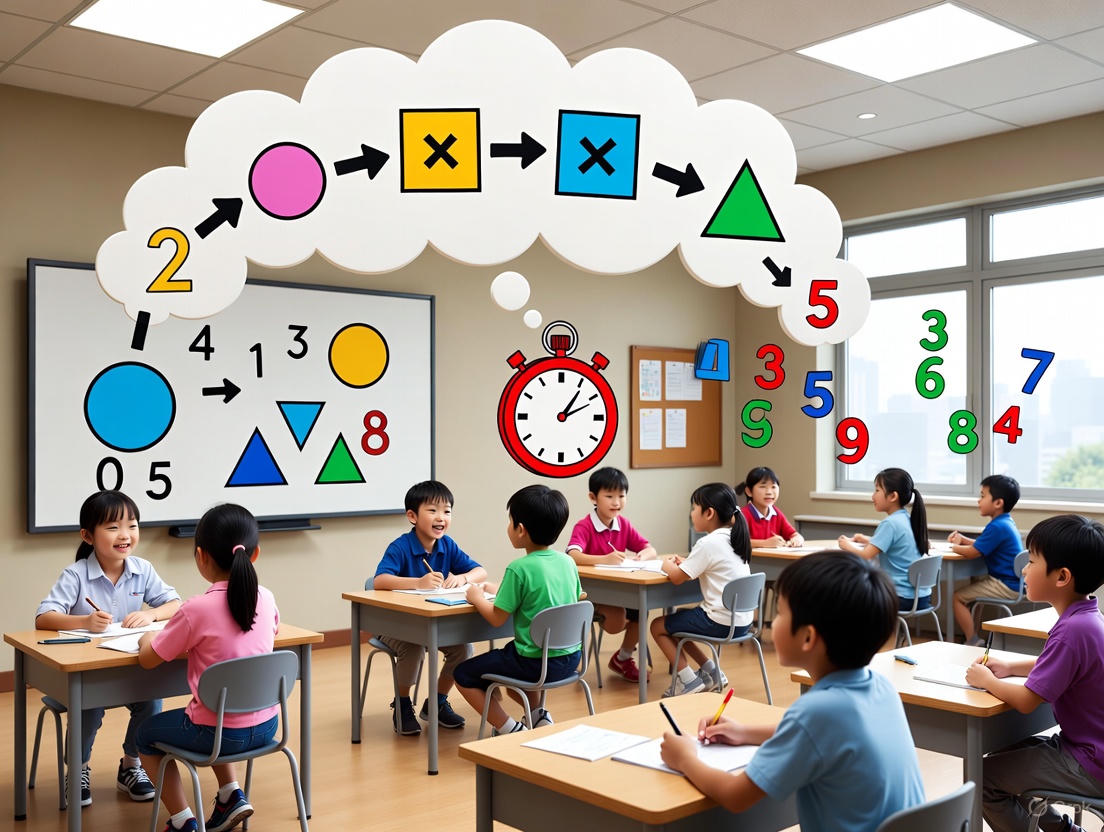
Subtopic: Applying Math Concepts to Real-Life Situations
Let's get specific. How can you help your child apply math concepts to real-life situations?
Interesting fact: The Fibonacci sequence (1, 1, 2, 3, 5, 8...) appears surprisingly often in nature, from the arrangement of petals in a flower to the spiral patterns of seashells. Math is truly the language of the universe!
The Path to Success: Tips for Singapore Parents & Students
Here are some actionable tips for Singapore parents and students on how to excel in Singapore Secondary 4 Math:
Remember, parents, your encouragement and support are crucial. Create a conducive learning environment at home, and celebrate your child's progress, no matter how small. Jiayou! With the right approach and a focus on application, your child can conquer Sec 4 Math and unlock a world of opportunities.
Alright, parents and students, let's talk about Secondary 4 Math. In Singapore, acing those exams is like the golden ticket, right? But here's the thing: simply memorizing formulas? That's like trying to build a skyscraper on a foundation of sand. Confirm collapse one, sooner or later! If you are looking for how to excel in singapore secondary 4 math, read on!
We all know the pressure cooker environment. The PSLE is done. Now comes secondary school. And for many parents and students, the focus becomes laser-sharp on exam results. But here’s a truth bomb: Sec 4 Math isn't just about getting that A1. It's about building a solid foundation for Junior College, polytechnic, university… and even your future career! And with AI becoming more and more prevalent, a strong grasp of mathematical principles is more crucial than ever. Don't just aim to pass lor, aim to understand!
Pitfalls of Relying Solely on Memorization in Sec 4 Math
Think of memorization as cramming for a test. You might regurgitate the formulas and steps for *that* particular exam, but what happens when the questions are twisted? Or when you encounter more complex problems in JC? You're sunk! Memorization doesn't foster understanding. It doesn't teach you *why* a formula works, or *how* to apply it in different situations. It's a short-term solution with potentially long-term consequences. So, don't be a parrot; be an eagle! Soaring high with true understanding!
Fun fact: Did you know that the word "mathematics" comes from the Greek word "máthēma," which means "knowledge, study, learning"? It’s more than just numbers; it's a way of thinking!
Effective Study Techniques for Sec 4 Math
So, what's the alternative? Building a strong foundation! This means understanding the underlying concepts, not just memorizing formulas. It's about connecting the dots between different topics and seeing how they all fit together.
Effective Study Techniques: Review and connect previous knowledge, creating a strong base.

Here's a breakdown of effective study techniques for Sec 4 Math:
Interesting fact: The concept of zero, crucial in modern mathematics, wasn't widely accepted until the 7th century! Imagine doing math without zero!
Building a Strong Foundation for Future Math
A solid understanding of Sec 4 Math prepares you for more advanced topics in JC and beyond. Think about it: calculus builds upon algebra, trigonometry is essential for physics, and statistics is used in almost every field. If you have a weak foundation, you'll struggle to keep up. In modern times, artificial intelligence has transformed the education field worldwide by facilitating individualized educational experiences through responsive systems that adapt content to individual learner rhythms and methods, while also streamlining grading and administrative duties to release instructors for increasingly impactful connections. Globally, AI-driven tools are closing educational shortfalls in underprivileged regions, such as using chatbots for linguistic mastery in underdeveloped countries or predictive tools to detect at-risk learners in Europe and North America. As the adoption of AI education gains speed, Singapore shines with its Smart Nation project, where AI technologies improve curriculum customization and equitable education for multiple needs, including adaptive learning. This strategy not only enhances assessment results and engagement in local schools but also aligns with international initiatives to cultivate lifelong skill-building competencies, readying learners for a technology-fueled economy amid principled factors like data protection and just access.. But with a strong foundation, you'll be able to tackle new challenges with confidence. This is how to excel in singapore secondary 4 math!
Consider this: Many high-paying jobs in Singapore, from finance to engineering to data science, require a strong foundation in mathematics. With the rise of AI, mathematical skills are more valuable than ever. So, investing in your math education is an investment in your future. Don't just study to pass the exam; study to build a brighter future!
Sec 4 Math is a stepping stone, not the final destination. By focusing on understanding and building a strong foundation, you'll not only ace your exams but also set yourself up for success in the years to come. Jiayou!
Okay, lah, Secondary 4 Math. It's not just about chiong-ing and memorising formulas like some kiasu Singaporean student, okay? It's about understanding the why behind the what. Let's be real, rote learning might get you a passing grade, but it won't help you excel in Singapore Secondary 4 Math. And in this AI age? Forget about it! You need to actually understand what you're doing.
Think of it this way: memorizing is like knowing the lyrics to a song, but not knowing how to play the instrument. You can sing along, but you can't create your own music. And trust me, in the real world, you need to be able to compose, not just recite.
Pitfalls of Relying Solely on Memorization in Sec 4 Math
Fun Fact: Did you know that the word "algebra" comes from the Arabic word "al-jabr," meaning "the reunion of broken parts"? It's a fitting name, considering how algebra helps us solve problems by piecing together different elements.
Effective Study Techniques for Sec 4 Math
Okay, so memorization is out. What's in? Deeper learning! Here's how to level up your study game and excel in Singapore Secondary 4 Math:
History Lesson (Kind Of): Remember those "killer" word problems? They've been around for ages! The ancient Egyptians were already solving complex Math problems thousands of years ago. So, don't feel too bad if you struggle sometimes – it's part of the human experience!
How to Excel in Singapore Secondary 4 Math: The Parent's Role
Parents, you play a crucial role in your child's success. Here's how you can support them:
Interesting Facts: Singapore consistently ranks highly in international Math assessments. This is a testament to the quality of our education system and the hard work of our students and teachers. But, it also means the competition is fierce!
Remember, lah, Sec 4 Math is a marathon, not a sprint. Focus on building a strong foundation, developing your problem-solving skills, and staying positive. With the right strategies and a little bit of kanchiong spider spirit (okay, maybe not too much!), you can excel in Singapore Secondary 4 Math and set yourself up for a bright future. Don't just memorise, understand! Your future self will thank you for it.