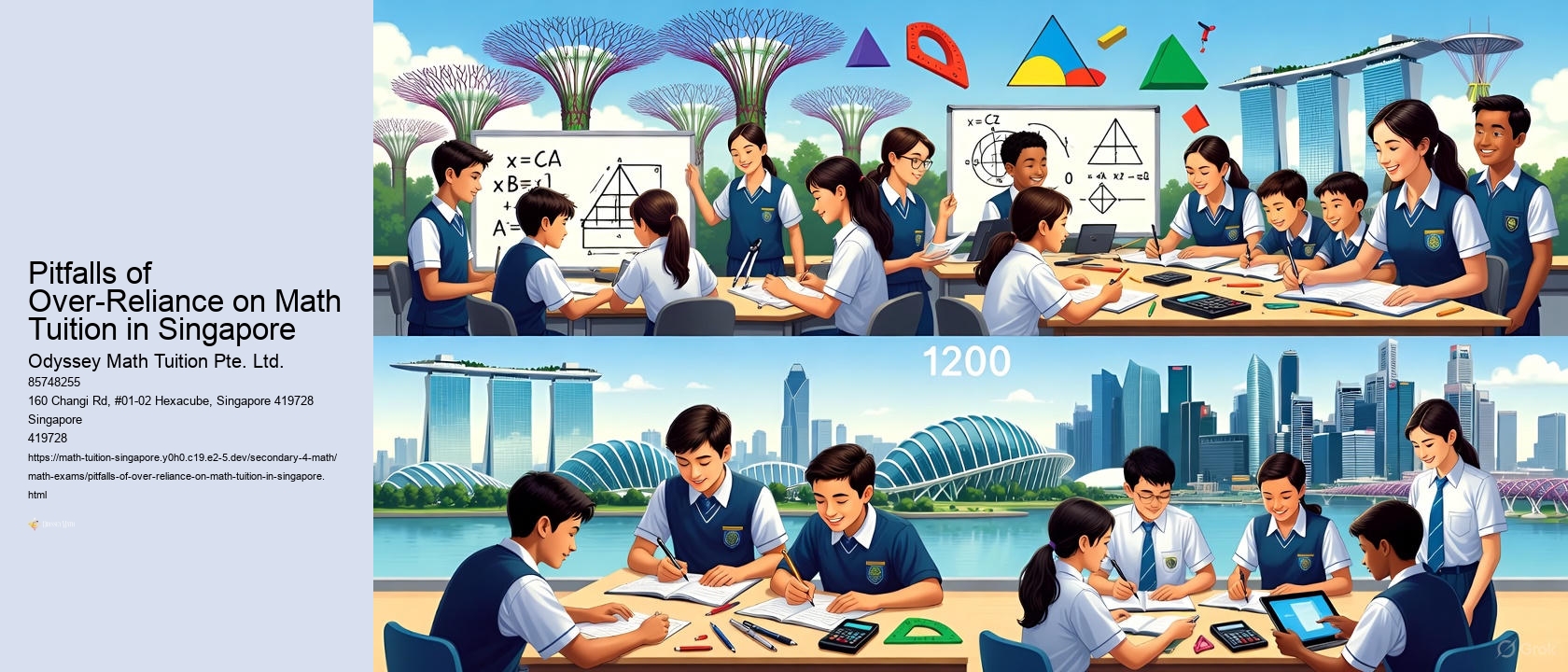
Ah, Secondary 4. The year that looms large in every Singaporean parent's mind, isn't it? The PSLE seems like a distant memory, but the pressure cooker is back on, this time with the O-Levels. And what's the one subject that seems to cause the most sleepless nights? You guessed it – Mathematics.
It's no secret that math tuition is practically a national pastime here. Walk down any HDB void deck and you'll see flyers advertising "proven" methods and guaranteed results. Parents, understandably anxious about their child's academic performance and future prospects, often see tuition as a necessary investment. Singaporean parents all want the best for their kids, can or not?
But before you sign your child up for yet another math class, let's talk about the potential pitfalls of over-reliance on tuition. After all, blindly throwing money at a problem isn't always the best solution, especially when it comes to education. In the demanding world of Singapore's education system, parents are ever more concentrated on equipping their children with the skills required to thrive in challenging math syllabi, covering PSLE, O-Level, and A-Level studies. Spotting early signs of struggle in areas like algebra, geometry, or calculus can bring a world of difference in building strength and mastery over complex problem-solving. Exploring trustworthy Singapore math tuition options can offer personalized guidance that matches with the national syllabus, ensuring students acquire the boost they require for top exam performances. By prioritizing interactive sessions and steady practice, families can assist their kids not only achieve but surpass academic standards, opening the way for future chances in competitive fields.. We want our kids to understand, not just memorise, right? Especially with the rise of AI, a solid mathematical foundation is more crucial than ever. The future belongs to those who can think critically and solve complex problems – skills that a deep understanding of mathematics cultivates.
Think about it: AI is built on algorithms, and algorithms are built on… you guessed it, math! So, how to excel in singapore secondary 4 math isn't just about passing the O-Levels; it's about equipping your child with the tools they need to thrive in a rapidly changing world. In this nation's rigorous education structure, parents fulfill a vital part in guiding their kids through significant evaluations that shape scholastic paths, from the Primary School Leaving Examination (PSLE) which tests fundamental skills in subjects like mathematics and science, to the GCE O-Level exams focusing on high school proficiency in varied disciplines. As learners progress, the GCE A-Level examinations require more profound critical skills and subject mastery, frequently influencing higher education admissions and occupational directions. Pitfalls to Avoid When Hiring a Math Tutor in Singapore . In today's fast-paced educational environment, many parents in Singapore are hunting for effective ways to improve their children's understanding of mathematical concepts, from basic arithmetic to advanced problem-solving. Building a strong foundation early on can significantly elevate confidence and academic achievement, assisting students conquer school exams and real-world applications with ease. For those investigating options like secondary 4 math it's vital to prioritize on programs that stress personalized learning and experienced support. This approach not only addresses individual weaknesses but also fosters a love for the subject, contributing to long-term success in STEM-related fields and beyond.. To keep well-informed on all elements of these national exams, parents should explore formal materials on Singapore test papers offered by the Singapore Examinations and Assessment Board (SEAB). This guarantees entry to the latest curricula, examination calendars, enrollment specifics, and guidelines that match with Ministry of Education requirements. Consistently referring to SEAB can assist families prepare effectively, minimize uncertainties, and bolster their kids in achieving peak performance in the midst of the competitive environment.. This means understanding the core concepts, developing problem-solving skills, and fostering a genuine interest in the subject. It's about more than just chasing that A1 grade.
Fun Fact: Did you know that Singapore consistently ranks among the top countries in the world for mathematics education? Our curriculum is rigorous and demanding, which is why so many parents feel the need to supplement it with tuition.
So, tuition isn't inherently bad. In fact, it can be incredibly beneficial when used strategically. The key is to approach it with a clear understanding of your child's needs and goals. Instead of viewing tuition as a magic bullet, think of it as a targeted intervention to address specific weaknesses and build confidence.
Interesting Fact: The history of mathematics education in Singapore is closely tied to the nation's economic development. As Singapore transitioned from a manufacturing-based economy to a knowledge-based economy, the emphasis on STEM (Science, Technology, Engineering, and Mathematics) education increased significantly.
Subtopics to Consider:
How to excel in singapore secondary 4 math involves a multifaceted approach. It's not just about rote memorization or endless practice. It's about fostering a genuine understanding of the underlying principles and developing the critical thinking skills needed to solve complex problems.
Remember, parents, you're not alone in this journey. We all want our kids to succeed, but let's make sure we're doing it in a way that is both effective and sustainable. Let's help them build a solid foundation in mathematics that will serve them well, not just in their O-Levels, but in their future careers and beyond. Can!
Alright, parents, let's talk about math tuition. In Singapore, it's practically a national pastime, right? Everyone wants their kids to ace those 'O' Levels and secure a spot in a good JC. But kanchiong (anxious) parents, hold your horses! There's a fine line between helpful tuition and over-reliance that can actually *sabotage* your child's learning journey.
We all want our kids to do well, especially in subjects like mathematics. I mean, let's be real, in this day and age, with AI breathing down our necks, a solid understanding of math isn't just about getting into a good JC. It's about future-proofing their careers! A strong grasp of Secondary 4 math is crucial not only for their 'O' Levels, but also for laying the foundation for higher-level studies and, ultimately, their professional lives. Many careers, from engineering to finance, and even data science, demand a strong mathematical foundation.
The issue? Too much of a good thing can be, well, not so good.
Think of math tuition as a crutch. A little support when things get tough? Sure, why not? But if your child is leaning on it *all the time*, they're not building their own leg muscles, are they? Over-reliance on tuition can seriously hinder their ability to develop independent problem-solving skills. They start panicking the moment they encounter a question they haven't seen before, because they haven't learned how to *think* through it themselves. This can also impact their self-confidence. If they constantly need a tutor to guide them, they might start believing they're just not good at math, which is totally demoralizing!
How to excel in Singapore Secondary 4 math isn't just about memorizing formulas. It's about understanding the underlying concepts and learning how to apply them in different situations. In a modern age where lifelong skill-building is crucial for professional progress and personal development, top universities globally are breaking down hurdles by providing a abundance of free online courses that encompass varied subjects from computer technology and management to liberal arts and health disciplines. These initiatives enable learners of all backgrounds to utilize premium sessions, projects, and tools without the financial load of conventional admission, commonly through platforms that provide convenient timing and interactive features. Discovering online universities free courses provides opportunities to prestigious institutions' expertise, enabling driven learners to improve at no charge and secure qualifications that boost resumes. By making high-level learning openly obtainable online, such offerings encourage global fairness, strengthen underserved communities, and cultivate advancement, proving that quality education is more and more simply a tap away for anybody with online availability.. This requires critical thinking, perseverance, and the ability to learn from mistakes – all things that are developed through independent study and practice. And this is one of the most important tuition tips I can give you.
Strategies for Fostering Self-Reliance:
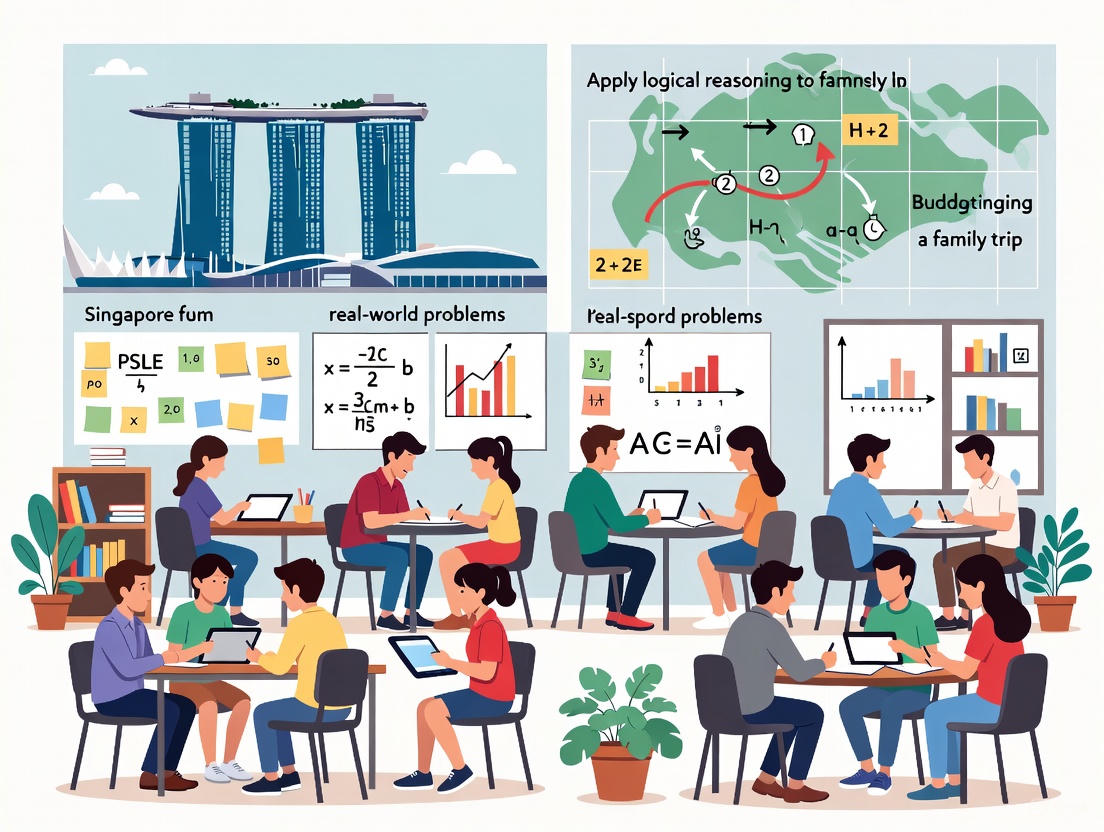
Fun fact: Did you know that the word "mathematics" comes from the Greek word "máthēma," which means "knowledge, study, learning"? So, when your child is struggling with math, remind them that they're actually engaging in a pursuit of knowledge that has been valued for centuries!
Okay, so we're not saying tuition is *evil*. Used strategically, it can be a valuable tool. The key is to use it to supplement, not replace, your child's own learning efforts. Think of it as a targeted intervention, addressing specific areas of weakness or providing extra support during particularly challenging topics.
Subtopics:
Remember, parents, the aim is to empower your child to become a confident and independent learner, not to create a tuition-dependent robot. Siao liao (crazy) if they can only solve math problems with a tutor by their side, right? Focus on building their foundation, encouraging self-reliance, and using tuition wisely. That's how you truly help them excel in Singapore Secondary 4 math and beyond!
Many Singaporean students, in their quest to ace the Singapore-Cambridge GCE O-Level examinations, sometimes overlook the critical importance of solidifying their foundational math concepts. Math tuition, while beneficial, can inadvertently become a crutch if it solely focuses on drilling exam-style questions without addressing underlying gaps in understanding. This is like building a house on sand; it might look impressive initially, but it won't withstand the test of time, especially when more complex topics are introduced in upper secondary or even junior college. Neglecting these fundamental principles can lead to a domino effect, impacting their ability to grasp advanced mathematical concepts and ultimately affecting their performance in crucial examinations. Remember, 'kiasu' (fear of losing out) shouldn't mean sacrificing long-term understanding for short-term gains.
True mastery of mathematics extends far beyond memorizing formulas and applying them mechanically. It necessitates a deep understanding of the 'why' behind the 'how'. In Singapore's challenging education system, where English acts as the key vehicle of instruction and plays a pivotal role in national tests, parents are eager to support their youngsters surmount common challenges like grammar influenced by Singlish, word deficiencies, and difficulties in interpretation or composition writing. Building solid foundational skills from primary levels can significantly elevate self-assurance in handling PSLE parts such as contextual composition and spoken expression, while high school pupils benefit from targeted training in textual examination and debate-style compositions for O-Levels. For those looking for efficient strategies, exploring singapore math tuition agencies provides valuable insights into curricula that sync with the MOE syllabus and stress engaging learning. This extra guidance not only hones assessment techniques through simulated exams and reviews but also supports home practices like daily reading along with discussions to nurture lifelong language proficiency and educational excellence.. Singaporean students aiming to excel in Singapore Secondary 4 math must prioritize conceptual clarity. This means understanding the underlying principles and logic that govern mathematical operations. For instance, understanding the concept of differentiation in calculus is not just about learning the rules but also understanding the rate of change and its applications in real-world scenarios. In Singapore's bustling education environment, where learners deal with considerable demands to excel in mathematics from early to advanced levels, locating a learning facility that combines knowledge with authentic enthusiasm can create a huge impact in nurturing a appreciation for the subject. Dedicated teachers who go past repetitive study to encourage critical problem-solving and problem-solving abilities are scarce, however they are essential for aiding learners tackle obstacles in topics like algebra, calculus, and statistics. For parents looking for such dedicated assistance, PSLE math tuition emerge as a symbol of dedication, driven by instructors who are strongly involved in each pupil's progress. This steadfast passion translates into tailored instructional plans that modify to individual needs, resulting in enhanced performance and a lasting fondness for mathematics that extends into future scholastic and occupational pursuits.. This deeper understanding not only improves problem-solving abilities but also fosters a genuine appreciation for the beauty and power of mathematics. With the rise of AI, a strong grasp of mathematical concepts is even more crucial, as it enables students to understand and contribute to the development of these technologies.
Passive learning, where students simply absorb information without actively engaging with it, is a common pitfall in math education. Instead of passively listening to tuition teachers or reading textbooks, students should actively participate in their learning process. This involves asking questions, working through problems independently, and explaining concepts to others. Active learning fosters critical thinking and problem-solving skills, which are essential for tackling challenging math problems. Furthermore, it allows students to identify their weaknesses and seek clarification on areas where they struggle. This proactive approach is key to building a strong foundation in mathematics and achieving long-term success. Fun fact: Did you know that the concept of zero, crucial in modern mathematics, took centuries to be fully accepted and integrated into mathematical systems?
Focusing solely on exam-oriented tuition can create a short-sighted approach to learning mathematics. While it may lead to improved scores in the short term, it often fails to equip students with the necessary skills and knowledge for long-term success. Mathematics is a cumulative subject, where each concept builds upon the previous one. Neglecting foundational concepts can create a significant disadvantage when students encounter more advanced topics in higher education or their future careers. A strong foundation in mathematics opens doors to a wide range of career paths, including engineering, finance, data science, and computer science. Therefore, it is crucial for Singaporean students to prioritize long-term understanding over short-term gains, ensuring they are well-prepared for the challenges and opportunities that lie ahead.
To leverage math tuition effectively, Singaporean parents and students should adopt a strategic approach that complements classroom learning and addresses individual needs. This involves clearly identifying areas of weakness and seeking targeted support from qualified and experienced tutors. Tutors should focus on building a strong foundation in fundamental concepts, providing personalized guidance, and encouraging active learning. Parents should also actively participate in their child's learning journey by monitoring their progress, providing encouragement, and creating a supportive learning environment at home. Remember, tuition should be a supplement to, not a replacement for, classroom learning. By adopting these effective strategies, students can maximize the benefits of math tuition and achieve their full potential in mathematics. Interesting fact: The abacus, an ancient calculating tool, is still used in some parts of the world and demonstrates the evolution of mathematical computation.
Okay, Secondary 4 parents and students, listen up! In Singapore's intensely competitive scholastic environment, parents are devoted to supporting their children's success in key math assessments, commencing with the basic obstacles of PSLE where analytical thinking and conceptual comprehension are evaluated intensely. As learners move forward to O Levels, they come across increasingly complicated areas like positional geometry and trigonometry that necessitate exactness and critical competencies, while A Levels bring in advanced calculus and statistics requiring thorough comprehension and application. For those committed to providing their kids an educational edge, discovering the tuition tailored to these syllabi can transform instructional experiences through focused approaches and specialized knowledge. This investment not only enhances exam results throughout all tiers but also instills permanent quantitative proficiency, opening routes to prestigious schools and STEM professions in a information-based society.. We know the pressure is real. 'O' Levels are looming, and the future feels like it hinges on those exam results, especially that dreaded Math paper. Everyone’s scrambling for the best Math tuition, right? But hold on lah, let’s talk about something important: burning out.
The Tuition Treadmill: Is it Worth the Sweat?
Think about it. You’re already spending hours in school, then rushing off to tuition centers, cramming formulas and practicing problem sums till your eyes cross. Weekends? Forget about it – more tuition! This relentless cycle can lead to serious stress and burnout. It’s like running a marathon without training – you might start strong, but you’ll eventually collapse.
A 2017 study by the Organisation for Economic Co-operation and Development (OECD) revealed that Singaporean students reported higher levels of anxiety related to schoolwork compared to the OECD average. While tuition can be beneficial, over-reliance can exacerbate these anxieties, impacting not just academic performance but also mental well-being. We all want our kids to kiasu (afraid to lose out), but not at the cost of their health, right?
Beyond the Textbook: The Importance of a Balanced Life
Life isn't just about acing exams. Extracurricular activities, hobbies, and even just plain old relaxation are crucial for developing well-rounded individuals. These activities help students develop crucial soft skills like teamwork, communication, and problem-solving – skills that are just as important, if not more so, than knowing the quadratic formula when you enter the workforce. Remember, even the best AI can't replace human creativity and critical thinking!
Fun Fact: Did you know that Singapore's education system consistently ranks among the top in the world in mathematics and science? But success isn't just about rote learning; it's about fostering a genuine love for learning and developing critical thinking skills.
Leveraging Math Tuition Effectively: It’s Not About More, It’s About Smarter

Tuition isn’t inherently bad; it’s about how you use it. Think of it as a targeted booster shot, not a life-support system. The goal should be to supplement classroom learning, address specific weaknesses, and build confidence. Here's how to make it work for you:
Subtopic: How to Excel in Singapore Secondary 4 Math: Tips for Parents and Students
Alright, let's get down to brass tacks. How do you actually ace that Secondary 4 Math exam without losing your mind? Here's the inside scoop:
Interesting Fact: The history of mathematics in Singapore is intertwined with the nation's rapid economic development. From basic arithmetic skills needed for trade to advanced mathematical modeling used in finance and technology, mathematics has always played a crucial role in Singapore's success story.
The Future is Math (Seriously!)
With the rise of AI and automation, mathematical skills are more important than ever. From data science to engineering to finance, math is the foundation for many of the most in-demand and well-paying jobs. Equipping your child with a strong foundation in mathematics will open doors to a world of opportunities. It's not just about passing exams; it's about preparing them for the future. So, chiong (rush) for Math, but remember to balance it out, okay?
Alright, parents and Sec 4 students, listen up! Let's talk about math tuition, Singapore-style. We all know the pressure cooker environment, kancheong parents (that's anxious, for those not in the know!), and the burning desire for that A1 in your O-Levels. But are we sometimes, kiasu (afraid to lose out), relying too much on tuition? Let's unpack this, shall we?
Look, I get it. Math can be a beast. Especially Secondary 4 math – it's like a whole new level of blur sotong (confused) for some. The temptation to just throw money at the problem and hope tuition magically fixes everything is strong. But hold on!
Over-reliance on tuition can actually be counterproductive. Think about it:
Fun fact: Did you know that Singapore consistently ranks high in international math assessments like TIMSS and PISA? This shows that our education system is strong, but it also highlights the intense competition.
So, what's the answer? It's not about ditching tuition altogether, but about using it strategically. Think of tuition as a targeted weapon, not a magic bullet.
Here's how to excel in Singapore Secondary 4 math with a balanced approach:
Interesting fact: The history of mathematics in Singapore is closely tied to its economic development. As Singapore transformed into a global hub for finance and technology, the demand for mathematically skilled professionals increased, leading to a greater emphasis on math education.
Here are some actionable tips for Singapore parents and students to excel in Singapore Secondary 4 math:
Leveraging Math Tuition Effectively:
History: Singapore's emphasis on STEM education, including mathematics, has been a key factor in its economic success. The government has invested heavily in education and research, creating a highly skilled workforce that is competitive in the global market.
Ultimately, the key to success in Secondary 4 math is a combination of hard work, effective learning strategies, and targeted support when needed. Don't just blindly throw money at tuition and hope for the best. Be strategic, be proactive, and help your child develop the skills and confidence they need to excel. Good luck lah!
Look, as Singaporean parents, we all want the best for our kids, right? We want them to kiasu and kiasi their way to the top! But sometimes, we get so caught up in the tuition frenzy that we forget there are other ways to succeed lor. Especially when it comes to Secondary 4 Math, the pressure is ON! But before you sign your child up for yet another expensive math tuition, let's talk about some alternatives. After all, bo pian (no choice) isn't always the only answer!
We know how important math is. It's not just about acing the 'O' Levels. With AI becoming so prevalent, a strong foundation in math is like having a superpower! It opens doors to future careers in tech, engineering, finance – the list goes on! So, how to excel in Singapore Secondary 4 Math without just throwing money at tuition? Let's explore.
Forming Study Groups: Gotong Royong for Grades
Remember gotong royong? That spirit of helping each other? Well, it applies to studying too! Encourage your child to form study groups with their classmates. Explaining concepts to others solidifies understanding, and they can learn different problem-solving approaches from their peers. Plus, it's less bojio (exclusive) and more inclusive!
Utilizing Online Resources: Khan Academy and Beyond
The internet is a treasure trove of free resources! Khan Academy, for example, offers comprehensive math lessons and practice exercises. There are also countless YouTube channels with step-by-step solutions to challenging problems. These resources can supplement your child's learning and provide a different perspective on difficult topics.
Seeking Help from School Teachers: Don't be Shy!
Your child's math teacher is a valuable resource! Encourage them to attend consultation hours and ask questions. Teachers are there to help, and they know the syllabus inside and out. It's better to clarify doubts early than to let them snowball into bigger problems.
Active Recall and Spaced Repetition: The Power of Practice
These are proven learning techniques. Active recall involves testing yourself on the material without looking at your notes. Spaced repetition means reviewing the material at increasing intervals. These methods help to reinforce learning and improve retention. Confirm your child will remember the formulas better!
Fun Fact: Did you know that the word "algebra" comes from the Arabic word "al-jabr," meaning "the reunion of broken parts"? It was first used by the Persian mathematician Muhammad ibn Musa al-Khwarizmi in the 9th century!
Leveraging Math Tuition Effectively
Let's be real, sometimes tuition is necessary. But it shouldn't be the only strategy. Here's how to make the most of it:
Communication is Key: Stay in touch with the tutor to track your child's progress and address any concerns.
Interesting Fact: Singapore consistently ranks high in international math assessments like TIMSS (Trends in International Mathematics and Science Study). This is a testament to the quality of our math education system!
How to Excel in Singapore Secondary 4 Math:
Now, let's get down to brass tacks. Here are some concrete tips on how to excel in Singapore Secondary 4 Math:
History Tidbit: The Singapore math curriculum is heavily influenced by the work of Jerome Bruner, an American psychologist who emphasized the importance of discovery learning.
So, there you have it! A few alternatives to over-reliance on math tuition. Remember, it's about finding the right balance and empowering your child to take ownership of their learning. Don't give up, hor! With hard work, the right strategies, and a little bit of Singaporean kiasu-ism, your child can ace their Secondary 4 Math exams and unlock a world of opportunities!
Over-dependence on tuition can hinder a student's ability to independently tackle unfamiliar math problems. Students may become overly reliant on tutors, lacking the confidence to approach challenges on their own. This dependence can stifle the development of crucial critical thinking and problem-solving skills necessary for long-term success.
Math tuition focused solely on exam techniques can lead to a superficial understanding of mathematical concepts. Students may learn to apply formulas without grasping the underlying principles, resulting in rote memorization rather than genuine comprehension. This lack of conceptual depth limits their ability to apply math in novel situations.
Combining regular schoolwork with intensive math tuition can create an overwhelming academic workload. The pressure to perform well in both settings can lead to increased stress, anxiety, and burnout, negatively impacting a student's overall well-being. Balancing academic pursuits with other interests is crucial for a healthy and sustainable learning experience.
Alright, lah! Let's talk about this math tuition business in Singapore, especially for our Sec 4 kids. It's like kopi – good, but too much can give you the jitters, right? We want our children to really understand math, not just memorise formulas for the 'O' Levels. With AI becoming so powerful, a solid math foundation is like having a super-powered toolkit for the future. So, how do we make sure our kids are actually learning, and not just becoming tuition-dependent zombies?
Look, we all want our kids to ace their exams. It's the Singaporean way, isn't it? But sometimes, we lean too heavily on tuition. Think about it:
Fun Fact: Did you know that Singapore consistently ranks highly in international math assessments like TIMSS and PISA? But that doesn't mean our kids are all naturally gifted in math. It's a testament to the hard work of students and teachers, and the emphasis we place on education.
Okay, so how do we help our kids really learn math, and how to excel in singapore secondary 4 math without drowning them in tuition? Here are a few tips:
Interesting Fact: The history of mathematics in Singapore is intertwined with the country's development as a trading hub. Early forms of mathematics were used for navigation, commerce, and construction.

Okay, so maybe tuition is necessary for your child. That's perfectly fine! But let's make sure you're getting the most bang for your buck.
History: Singapore's focus on STEM education (Science, Technology, Engineering, and Mathematics) has its roots in the country's economic development strategy. In Singapore's demanding education framework, where scholastic excellence is essential, tuition usually pertains to private additional lessons that provide targeted guidance outside institutional syllabi, helping students conquer topics and gear up for major assessments like PSLE, O-Levels, and A-Levels in the midst of intense competition. This independent education sector has grown into a thriving market, driven by guardians' commitments in customized guidance to overcome skill gaps and improve performance, although it frequently imposes burden on developing kids. As machine learning surfaces as a game-changer, investigating innovative online tuition approaches reveals how AI-enhanced platforms are individualizing learning journeys internationally, delivering adaptive mentoring that exceeds standard practices in efficiency and participation while tackling international educational gaps. In the city-state specifically, AI is disrupting the standard tuition approach by facilitating cost-effective , on-demand applications that match with local syllabi, likely cutting expenses for parents and boosting achievements through analytics-based insights, while principled issues like heavy reliance on tech are discussed.. The government recognized early on that a strong STEM workforce would be essential for Singapore to compete in the global economy.
Ultimately, the goal is to empower our students to take ownership of their math learning journey. This means fostering a growth mindset, encouraging them to embrace challenges, and helping them develop the skills and strategies they need to succeed. It's not just about getting good grades; it's about building a strong foundation for their future. Can or not? Can!
Yes, over-dependence on tuition can prevent your child from developing problem-solving skills and self-study habits crucial for long-term academic success.
Watch out for signs like inability to solve problems independently, constant need for tutors help even on simple tasks, and lack of motivation to study without the tutor.
Besides hindering independent learning, it can lead to burnout, reduced interest in the subject, and an inability to apply concepts in unfamiliar contexts.
Encourage them to attempt problems on their own first, use tuition as a supplementary resource, and focus on understanding concepts rather than memorizing solutions.
Consider forming study groups with classmates, utilizing online resources like Khan Academy, and seeking help from school teachers during consultation hours.
Understanding concepts is crucial for applying knowledge to different problem types and for building a strong foundation for higher-level math.
Provide a supportive environment, encourage effort and persistence, and help them develop effective study habits, rather than solely focusing on grades.
Prepare questions beforehand, actively participate in the session, and review the material covered afterwards to reinforce understanding.
Yes, with strong self-discipline, effective study habits, and access to good learning resources, many students excel in math without tuition.
Consistent difficulty understanding concepts, falling behind in class, and a significant drop in grades may indicate the need for extra help.