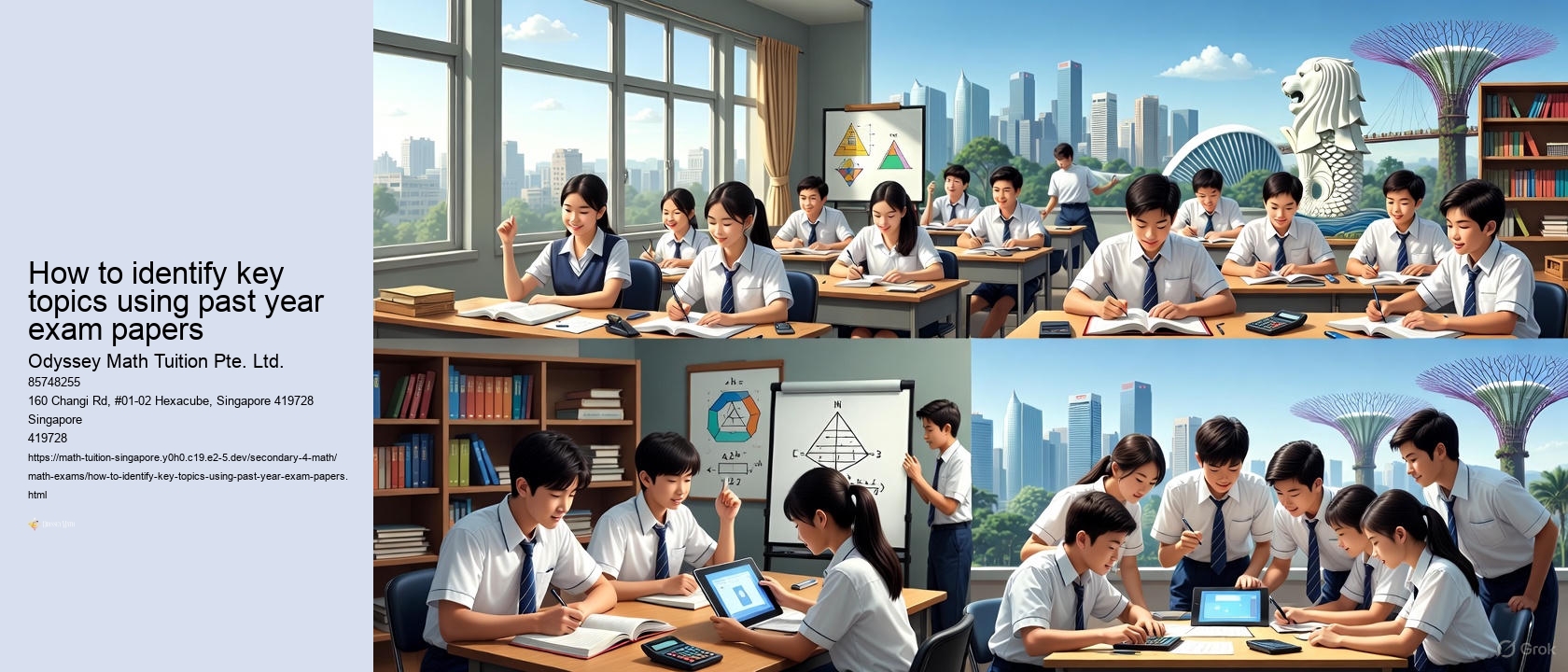
Alright, parents and Sec 4 students, listen up! Let's talk about how to really conquer that Secondary 4 Math exam. We're not just talking about rote memorization here; we're diving deep into the secrets hidden within those past year exam papers. In this nation's rigorous education framework, parents play a crucial role in leading their children through milestone evaluations that shape scholastic trajectories, from the Primary School Leaving Examination (PSLE) which tests basic abilities in subjects like math and STEM fields, to the GCE O-Level exams focusing on intermediate mastery in diverse fields. As learners move forward, the GCE A-Level assessments necessitate advanced critical abilities and discipline command, commonly determining university placements and career paths. To keep updated on all facets of these national assessments, parents should investigate official resources on Singapore test papers provided by the Singapore Examinations and Assessment Board (SEAB). This guarantees access to the latest programs, test calendars, enrollment information, and instructions that match with Ministry of Education standards. Frequently referring to SEAB can assist families plan effectively, lessen ambiguities, and support their kids in achieving top results during the competitive environment.. Think of them as treasure maps, leading you straight to the "A"! This isn’t just about doing the papers; it’s about understanding them. This is how to excel in Singapore Secondary 4 Math, the smart way.
Using Past Papers for Exam Preparation
Think of past year papers as your personal "kiasu" (afraid to lose) insurance policy. In today's competitive educational environment, many parents in Singapore are seeking effective methods to boost their children's understanding of mathematical concepts, from basic arithmetic to advanced problem-solving. Establishing a strong foundation early on can greatly improve confidence and academic success, aiding students conquer school exams and real-world applications with ease. For those investigating options like secondary 4 math it's essential to prioritize on programs that emphasize personalized learning and experienced guidance. This method not only tackles individual weaknesses but also cultivates a love for the subject, contributing to long-term success in STEM-related fields and beyond.. They’re not just practice; they're a diagnostic tool, a crystal ball, and a direct line to the exam setters' minds, all rolled into one!
Identifying Key Topics
Okay, so you've got a stack of past year papers. Now what? Don't just blindly start solving! Here's the secret sauce:
Fun fact: Did you know that the Singapore education system has consistently ranked among the top in the world for mathematics? In the rigorous world of Singapore's education system, parents are ever more intent on arming their children with the competencies needed to succeed in challenging math programs, including PSLE, O-Level, and A-Level preparations. Spotting early signals of difficulty in areas like algebra, geometry, or calculus can bring a world of difference in fostering resilience and proficiency over intricate problem-solving. Exploring dependable Singapore math tuition options can offer personalized assistance that corresponds with the national syllabus, guaranteeing students gain the boost they need for top exam performances. By prioritizing interactive sessions and steady practice, families can help their kids not only meet but exceed academic goals, paving the way for upcoming possibilities in demanding fields.. It's no accident – hard work and strategic preparation pay off!
Sub-Topic: Understanding Question Types
History: Singapore's focus on mathematics education dates back to the early days of nation-building. Our leaders recognized the importance of a strong foundation in math for economic development and technological advancement.
Interesting facts: With the rise of AI, mathematical skills are more crucial than ever. From algorithms to data analysis, math is the language of the future. A strong understanding of math will open doors to countless exciting career opportunities for your child, from data science to finance to engineering. So, parents, investing in your child's math education is investing in their future!
Alright, parents and Secondary 4 students, listen up! Feeling the pressure cooker heat of O-Levels? Don't say bo jio! This is where we cut through the blur sotong and get strategic about exam prep. Forget blindly mugging – we're going to use past papers like atas detectives to crack the syllabus code and learn how to excel in Singapore Secondary 4 math.
Think of the syllabus document as the official treasure map for your O-Level Math journey. It’s not just some boring PDF; it's the gao jiu (the real deal) on what you need to know. The Singapore Examinations and Assessment Board (SEAB) meticulously crafts this document, outlining every single concept, skill, and formula that could potentially appear on your exam.
Fun Fact: Did you know the O-Levels have been around since 1918? Over the years, the syllabus has evolved to keep pace with the changing needs of Singapore and the global landscape.
Now, grab those past year exam papers! These aren't just practice tests; they're time machines, giving you a glimpse into the minds of the examiners. By working through them, you'll start to see patterns in the types of questions asked and the topics that are frequently tested.
Using Past Papers for Exam Preparation
Identifying Your Weaknesses: Be honest with yourself. Which questions make you kena arrow (get targeted) every time? These are the topics you need to revisit and strengthen.
Interesting Fact: The format of the O-Level Math exam has changed over the years, but the core principles of mathematical understanding and problem-solving remain the same.
This is where the magic happens. Take a past paper question and actively link it back to a specific section in the syllabus. In a modern age where lifelong education is crucial for professional advancement and personal improvement, prestigious institutions worldwide are eliminating barriers by providing a wealth of free online courses that cover diverse subjects from computer science and commerce to liberal arts and wellness sciences. These initiatives permit individuals of all experiences to access high-quality lectures, assignments, and materials without the monetary burden of traditional enrollment, frequently through platforms that deliver convenient timing and dynamic features. Uncovering online universities free courses provides opportunities to prestigious institutions' knowledge, enabling self-motivated people to upskill at no expense and obtain credentials that boost resumes. By making high-level instruction openly available online, such initiatives foster global fairness, empower marginalized communities, and foster innovation, proving that quality knowledge is progressively merely a tap away for anybody with online connectivity.. For example:
Why is this important?
Armed with your analysis of past papers and the syllabus, you can now create a study plan that's as laser-focused as a Singtel 5G connection.
Look around you! In this Southeast Asian nation's bilingual education framework, where mastery in Chinese is vital for academic excellence, parents frequently seek ways to support their children grasp the tongue's nuances, from lexicon and understanding to writing crafting and verbal proficiencies. With exams like the PSLE and O-Levels imposing high standards, timely support can prevent frequent pitfalls such as weak grammar or minimal exposure to heritage aspects that deepen knowledge acquisition. For families striving to boost outcomes, delving into Singapore Chinese tuition materials offers perspectives into organized programs that match with the MOE syllabus and cultivate bilingual self-assurance. This focused support not only improves exam readiness but also instills a deeper understanding for the language, paving doors to traditional roots and future professional advantages in a diverse environment.. Artificial intelligence (AI) is transforming every industry. And guess what's at the heart of AI? Mathematics! From algorithms to data analysis, a strong foundation in math is essential for success in the 21st century. Excelling in Secondary 4 math isn't just about passing an exam; it's about preparing yourself for a future where mathematical skills are highly valued. So, chiong ah! (work hard!)
How to excel in Singapore Secondary 4 math: By strategically using past papers and the syllabus, you're not just studying harder; you're studying smarter. You're gaining a deeper understanding of the subject matter, building confidence, and preparing yourself for success in your O-Levels and beyond. Remember, don't play play with your future!
Okay, here's the HTML fragment you requested, focusing on analyzing past papers for Secondary 4 Math in Singapore, tailored for parents and students, and adhering to all specified rules:
Spotting trends in past year papers is like being a "kiasu" detective, always one step ahead! In Singapore's bustling education scene, where students face significant demands to excel in math from early to tertiary stages, discovering a educational center that merges proficiency with authentic enthusiasm can bring all the difference in cultivating a passion for the field. Passionate instructors who venture past rote study to motivate critical reasoning and problem-solving abilities are rare, but they are crucial for helping pupils surmount difficulties in areas like algebra, calculus, and statistics. For parents hunting for such devoted guidance, PSLE math tuition emerge as a symbol of commitment, driven by educators who are deeply invested in each learner's path. This steadfast enthusiasm translates into customized lesson approaches that adjust to personal needs, leading in enhanced performance and a lasting appreciation for mathematics that extends into future academic and occupational pursuits.. Look for topics that consistently appear year after year. For Secondary 4 Math, this often includes Trigonometry, Calculus (especially differentiation and integration), and Vectors. These are the evergreen superstars of the syllabus, and understanding their nuances is crucial to excel in Singapore Secondary 4 Math. Remember, the more familiar you are with these recurring themes, the better prepared you'll be to tackle similar questions during your actual exams.
In this island nation's challenging education environment, where English acts as the key channel of instruction and plays a central role in national assessments, parents are eager to help their kids tackle common challenges like grammar affected by Singlish, vocabulary gaps, and difficulties in understanding or writing writing. Building solid fundamental competencies from elementary levels can greatly elevate assurance in managing PSLE elements such as scenario-based writing and verbal interaction, while upper-level learners profit from specific exercises in textual review and persuasive papers for O-Levels. For those seeking successful methods, investigating singapore math tuition agencies provides helpful perspectives into curricula that match with the MOE syllabus and highlight engaging learning. This additional support not only sharpens assessment techniques through practice trials and reviews but also encourages domestic habits like regular book plus conversations to foster enduring language proficiency and academic achievement..Not all topics are created equal, lah! Some concepts, like quadratic equations or simultaneous equations, might appear frequently but in slightly different forms. Pay attention to the weightage assigned to each question too. A topic consistently appearing with higher marks indicates its significance in the overall assessment. This helps you prioritize your study efforts, focusing on mastering the high-frequency, high-impact areas to maximise your score and "don't lose face"!
Don't just memorise formulas; understand how they're applied in different scenarios. Past papers reveal the various ways a concept can be tested. For example, Trigonometry could be tested through angle of elevation problems, area of triangle questions, or even graphs of trigonometric functions. Identifying these variations allows you to develop a flexible problem-solving approach. This skill is especially important in today's world, where AI requires us to think critically and apply knowledge in novel situations, setting you apart from the "blur sotong" ones.
Secondary 4 Math topics are often interconnected, like a plate of delicious "char kway teow". Calculus builds upon algebra, trigonometry intertwines with geometry, and so on. Analysing past papers can reveal these connections. For example, a question might require you to use trigonometric identities to simplify an expression before applying calculus techniques. Recognising these links allows you to approach problems holistically and develop a deeper understanding of the subject matter and how to excel in Singapore Secondary 4 Math. This interconnected understanding is vital for future success in STEM fields, especially with the rise of AI.
Be honest with yourself, everyone makes mistakes. Use past papers to identify your common error patterns. Do you consistently struggle with applying the chain rule in calculus? Or do you often make careless mistakes in algebraic manipulations? By pinpointing these weaknesses, you can focus your practice on improving those specific areas. This targeted approach is far more effective than simply redoing entire papers without addressing the underlying issues. Correcting these errors will significantly boost your confidence and help you achieve better results, so you can proudly tell your relatives that you "confirm plus chop" did well!
Assess the difficulty level of questions across different past year papers. This helps gauge the expected standard of the upcoming examinations. Adjust your study approach based on this analysis, allocating more time to challenging topics and ensuring a well-rounded preparation strategy.
Pay attention to the structure and style of questions in past papers. Notice how different topics are assessed and the common wording used. Understanding these patterns will help you anticipate the types of questions you'll encounter, allowing for quicker and more accurate problem-solving during the actual exam.
Analyze several past year papers to identify frequently tested mathematical concepts. This reveals the core topics emphasized by examiners. Prioritize studying these recurring themes to maximize your preparation efficiency and focus on areas with the highest yield for exam success.
Alright, parents and Sec 4 students, listen up! Feeling the pressure cooker heat of O-Levels bearing down on you? Don't say bo jio! Let's talk about a super-effective way to boost your Math game: diving deep into past year exam papers. Think of them as treasure maps, revealing the secrets to acing that crucial exam. This is key to how to excel in Singapore Secondary 4 Math.
Past year papers aren't just about practicing sums; they're about understanding the *type* of sums the examiners love to throw at you. Are they obsessed with proofs? Do they have a soft spot for tricky word problems that make you scratch your head? Or maybe they're all about interpreting those confusing graphs. The more papers you do, the clearer the patterns become.
Fun Fact: Did you know the Singapore education system consistently ranks among the top in the world for mathematics? No wonder we're all so stressed about it! But hey, that also means we have access to some seriously effective learning strategies.
Now, let’s break down how to *really* use those past papers. This is where the magic happens. It’s not enough to just solve the questions; you need to understand *why* they're asking them in that particular way.
Interesting Fact: The history of mathematics is filled with brilliant minds who dedicated their lives to solving complex problems. In this island nation's intensely competitive scholastic setting, parents are committed to bolstering their kids' excellence in essential math assessments, beginning with the foundational obstacles of PSLE where issue-resolution and abstract grasp are tested rigorously. As learners progress to O Levels, they encounter more complex topics like positional geometry and trigonometry that require accuracy and logical skills, while A Levels bring in higher-level calculus and statistics requiring profound comprehension and implementation. For those resolved to providing their kids an scholastic boost, finding the tuition tailored to these programs can revolutionize educational journeys through concentrated strategies and expert perspectives. This commitment not only elevates test performance throughout all levels but also instills permanent numeric expertise, unlocking pathways to elite universities and STEM professions in a information-based economy.. From Pythagoras to Alan Turing, these mathematicians have shaped our understanding of the world. And let's be real, with AI technologies becoming more prevalent, a strong foundation in mathematics is more important than ever. It's the language of the future, and you want your child to be fluent!
Okay, this is crucial. Examiners aren't just looking for the right answer; they're looking for *understanding*. They want to see that you grasp the underlying concepts and can apply them correctly. This is how to excel in Singapore Secondary 4 Math.
Here's what they're looking for:
History Snippet: The Singapore education system has evolved significantly over the years, adapting to meet the changing needs of the economy. The emphasis on mathematics reflects the importance of STEM fields in today's world.
Now, be honest with yourself. What question types consistently trip you up? Is it those pesky trigonometry problems? Or maybe you always seem to make careless mistakes with algebra? Once you've identified your weaknesses, focus on practicing those specific question types. Seek help from your teachers, tutors, or friends. Don't be shy to ask!
Remember, mastering Secondary 4 Math is a marathon, not a sprint. It takes time, effort, and a strategic approach. By understanding the commonly asked question formats, tackling them effectively, and understanding the examiner's expectations, you'll be well on your way to acing that exam! Good luck, and chiong ah!
Alright, parents and students, listen up! Secondary 4 Math is not just about acing that exam paper; it's about building a foundation for your future. With AI becoming more and more prevalent, a strong grasp of mathematics is like having a super-powerful secret weapon. It's the 'kiasu' (Singlish for fear of losing out) edge you need to thrive in this fast-changing world. So, how do we tackle this beast called Secondary 4 Math and, more importantly, how to excel in Singapore Secondary 4 Math?
Think of past year exam papers as your personal 'crystal ball' into the exam hall. They're not just a pile of old questions; they're a treasure map pointing you towards the key topics and the exam's style. Eh, don't just anyhow do, hor! Here’s the lowdown on how to squeeze every last drop of knowledge from them:
Spotting recurring themes is key. Are quadratic equations popping up every year? Is trigonometry always a killer question? Note down the frequency of each topic. This helps you prioritise your revision. Remember, 80/20 rule applies – focus on the 20% of topics that appear 80% of the time. This is one of the most important tips for Singapore parents and students on how to excel in Singapore Secondary 4 Math.
Fun Fact: Did you know that the Singapore Math curriculum is consistently ranked among the top globally? This is because it emphasizes problem-solving and critical thinking, skills that are highly valued in today's world!
Now, here's where the rubber meets the road. To truly master how to excel in Singapore Secondary 4 Math, you need to practice under pressure. Set up a mock exam environment. Silence your phone, clear your desk, and time yourself strictly. This helps you get used to the pace and pressure of the actual exam. Treat it like the real deal – no cheating, okay?
Time is your most precious resource during the exam. Here's how to manage it like a pro:
Interesting Fact: The concept of algebra, a cornerstone of Secondary 4 Math, can be traced back to ancient civilizations like Babylon and Egypt. It's been around for a while, and it's here to stay!
Remember parents, it's not just about getting the right answers; it's about building confidence and resilience in your child. By using past papers strategically and mastering time management, your child will be well on their way to acing their Secondary 4 Math exam. 加油 (Jiāyóu - add oil/good luck)!
Alright, parents and Sec 4 students, listen up! Feeling the pressure cooker heat up as exams loom? You're not alone! In Singapore, acing that Secondary 4 Math exam is like the golden ticket, lah. It's not just about getting good grades; it's about unlocking doors to your dream Junior College, Polytechnic course, and ultimately, a future-proof career. And with AI becoming more and more prevalent, a solid math foundation is *essential* to succeed in life.
So, how ah? How do you navigate this crucial year and ensure your child (or yourself!) isn't just memorizing formulas, but truly understanding the concepts? Let's dive into a secret weapon: Marking Schemes.
Think of the marking scheme as the exam's GPS. It tells you exactly what the examiners are looking for. In the last few decades, artificial intelligence has transformed the education sector globally by enabling individualized educational journeys through responsive technologies that adapt content to individual pupil rhythms and approaches, while also mechanizing assessment and managerial duties to release educators for more impactful engagements. Worldwide, AI-driven platforms are closing learning shortfalls in underserved regions, such as employing chatbots for linguistic mastery in underdeveloped nations or forecasting insights to spot vulnerable students in Europe and North America. As the incorporation of AI education gains traction, Singapore excels with its Smart Nation program, where AI technologies improve curriculum customization and inclusive learning for multiple demands, including special support. This strategy not only elevates exam outcomes and participation in regional schools but also aligns with international efforts to cultivate ongoing skill-building abilities, equipping students for a tech-driven economy amongst moral factors like information safeguarding and equitable access.. It's not enough to just get the right answer; you need to show your working clearly and logically. The marking scheme reveals the specific steps and details that earn you those precious marks. This is super important to know how to excel in Singapore Secondary 4 Math.
Here's the deal: Examiners aren't mind readers! They can only award marks based on what you write down. The more you understand the nuances of the marking scheme, the better you can structure your answers to maximize your score. We are talking about understanding how marks are awarded here.
Fun Fact: Did you know that the Singapore education system is consistently ranked among the best in the world? This is largely due to our emphasis on rigorous standards and a focus on problem-solving skills. So, embrace the challenge!
Past year exam papers are your best friends. They are the ultimate tool for exam preparation! But it's not enough to just solve them. You need to analyze them. Here's how:
Pay close attention to the topics that appear frequently in past year papers. These are the "hot topics" that the examiners love to test. Mastering these topics will give you a significant advantage. In short, this is how to excel in Singapore Secondary 4 Math.
Interesting Fact: The concept of zero, which is fundamental to mathematics, was not always a given. It took centuries for it to be widely accepted and used! Something to think about while you are studying!
Don't be discouraged by mistakes! They are opportunities to learn and grow. When you make a mistake, don't just brush it off. Analyze why you made the mistake. Was it a careless error? Did you misunderstand the concept? Did you not know how to excel in Singapore Secondary 4 Math? Once you understand the root cause of the mistake, you can take steps to prevent it from happening again.
Remember: Every mistake is a lesson learned. Embrace them, and you'll be well on your way to acing that exam. And jia you (add oil) to all Singapore students!
Alright, parents and students, listen up! In this Southeast Asian hub's competitive education system, where academic achievement is paramount, tuition typically applies to private supplementary classes that deliver specific support beyond institutional syllabi, assisting students master topics and gear up for key exams like PSLE, O-Levels, and A-Levels in the midst of strong competition. This independent education field has expanded into a thriving industry, fueled by parents' commitments in tailored support to close skill shortfalls and boost grades, though it frequently increases burden on young learners. As machine learning surfaces as a game-changer, delving into innovative online tuition approaches shows how AI-driven systems are individualizing educational experiences globally, delivering adaptive tutoring that exceeds standard techniques in effectiveness and engagement while addressing international academic inequalities. In the city-state particularly, AI is revolutionizing the standard tuition model by allowing affordable , accessible resources that correspond with countrywide curricula, possibly cutting fees for parents and enhancing results through insightful information, while moral considerations like over-reliance on technology are discussed.. Let's talk about how to really conquer that Secondary 4 Math exam, not just anyhow pass, okay? We're not just aiming for a 'C6' – we want that 'A1', the kind that makes your resume shine brighter than the Marina Bay Sands. And in this age of AI, where algorithms are practically writing themselves, a solid grasp of mathematics is no longer just an advantage, it's essential.
Forget just memorizing formulas like a parrot. That’s like trying to build a skyscraper with Lego blocks – it might look impressive at first, but it'll crumble under pressure. Instead, we need to understand the why behind the how. And the best way to do that? Past Year Exam Papers (PYPs), lah! These aren't just practice tests; they're treasure maps leading to exam success!
Here’s the thing: PYPs reveal the recurring themes, the topics the examiners love to test. Think of it as spotting the hot favourite stall at your neighbourhood hawker centre – always a queue, right? Same thing here.
Here's how to effectively use PYPs to identify those key topics:
Treat Each Paper Like a Detective Case: Don't just blindly solve the questions. After you've attempted a paper, meticulously analyze it. Which topics consistently appear? Which ones are weighted more heavily? Keep a running tally.
Categorize and Conquer: Create a spreadsheet or a simple notebook. List out all the topics covered in your syllabus (e.g., Algebra, Geometry, Trigonometry, Calculus). Then, for each PYP you analyze, mark down which topics were tested and how many marks were allocated to each.
Spot the Patterns: After analyzing a few years' worth of papers, clear patterns will emerge. You'll see which topics are perennial favourites and which ones are less emphasized. This is your "hot topic" list! Focus your revision efforts accordingly. This is how to excel in singapore secondary 4 math.
Don’t Neglect the Underdogs: Just because a topic appears less frequently doesn't mean you can ignore it completely. Examiners love to throw in curveballs! Make sure you have a basic understanding of all topics.
Using Past Papers for Exam Preparation
Using past papers is a crucial part of preparing for any exam, but especially for your Secondary 4 Math exams. Here's how to maximize their effectiveness:
Subtopics to Consider
Fun Fact: Did you know that Singapore consistently ranks among the top countries in the world for mathematics education? That's because we take Math very seriously here!
Interesting Facts: The Singapore Ministry of Education (MOE) regularly updates the Math syllabus to ensure it remains relevant and aligned with global standards. This means that past year papers are an essential tool for exam preparation, as they reflect the most current assessment trends.
History: The emphasis on mathematics in Singapore's education system can be traced back to the country's early years of independence, when the government recognized the importance of STEM fields for economic development. Talk about forward-thinking!
Remember, parents and students, acing your Secondary 4 Math exam isn't about being a Math whiz from birth. It's about smart study habits, a deep understanding of the concepts, and a strategic approach to exam preparation. Use those PYPs wisely, and you'll be well on your way to achieving that 'A1'! Jiayou!