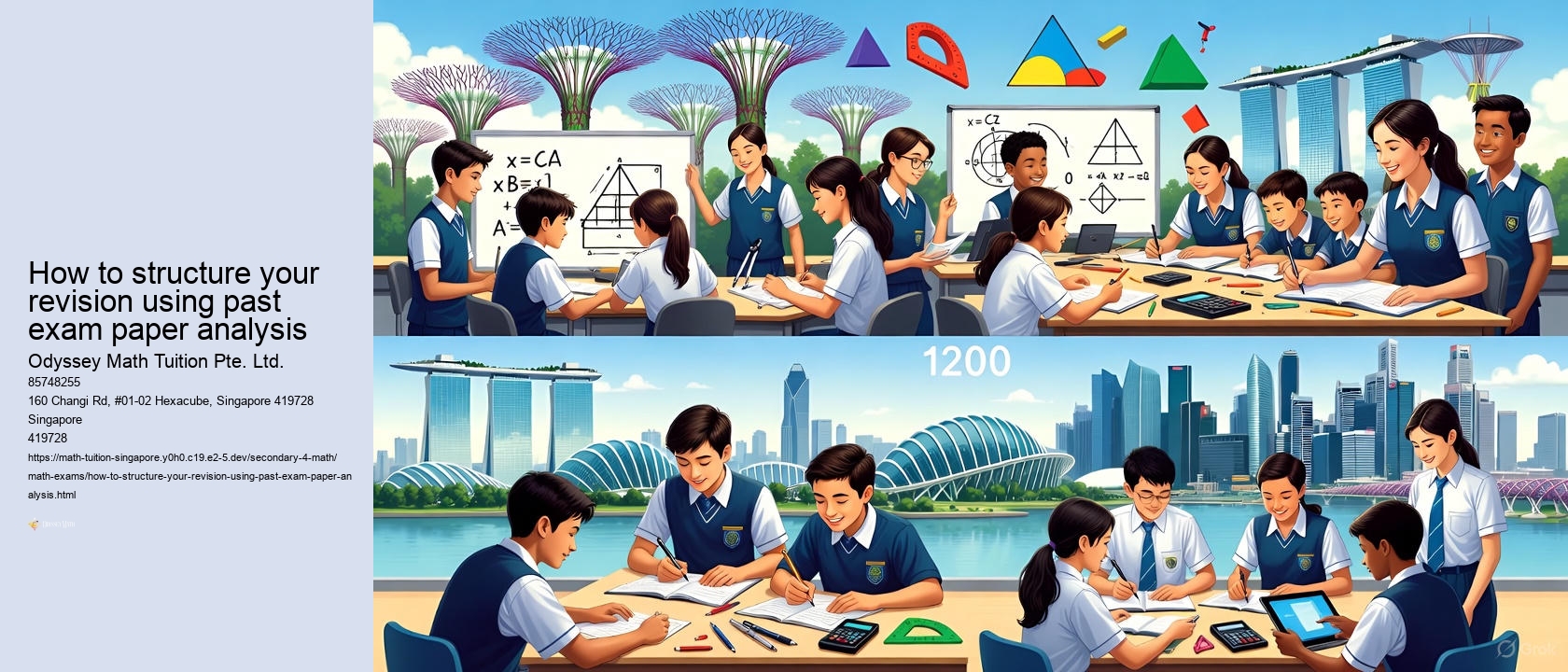
Alright, parents and Sec 4 students, listen up! Feeling the pressure cooker heat up as exams loom? Don't say bo jio – we're here to give you the secret weapon to conquer those Math papers: past exam papers! Think of them as your personal 'x marks the spot' on the treasure map to exam success. This isn't just about blindly doing questions; it's about strategic analysis, like a general planning their battle strategy. This is how to excel in Singapore Secondary 4 Math, confirm plus chop!
And let's be real, in this day and age of AI, a strong foundation in mathematics isn't just about acing your O-Levels. It's about future-proofing your career! From coding to data analysis, Math is the language of the future. So, don't play play!
So, how do you transform from a past paper novice to a past paper pro? In this nation's rigorous education structure, parents fulfill a crucial function in directing their children through key tests that form educational trajectories, from the Primary School Leaving Examination (PSLE) which assesses foundational abilities in subjects like math and STEM fields, to the GCE O-Level assessments focusing on high school mastery in varied fields. As learners move forward, the GCE A-Level tests demand deeper analytical capabilities and discipline command, frequently influencing tertiary admissions and occupational paths. To remain knowledgeable on all elements of these countrywide evaluations, parents should explore official information on Singapore test papers offered by the Singapore Examinations and Assessment Board (SEAB). This guarantees access to the newest syllabi, assessment calendars, sign-up information, and instructions that correspond with Ministry of Education standards. Frequently checking SEAB can aid families prepare effectively, minimize uncertainties, and bolster their offspring in attaining optimal outcomes in the midst of the competitive scene.. It's all about smart studying, not just hard studying. Here's the breakdown:
First things first, treat those past papers like a detective novel. In today's competitive educational landscape, many parents in Singapore are hunting for effective strategies to boost their children's understanding of mathematical concepts, from basic arithmetic to advanced problem-solving. Creating a strong foundation early on can substantially boost confidence and academic success, aiding students handle school exams and real-world applications with ease. For those exploring options like secondary 4 math it's vital to concentrate on programs that highlight personalized learning and experienced support. This strategy not only tackles individual weaknesses but also fosters a love for the subject, contributing to long-term success in STEM-related fields and beyond.. Scour them for recurring themes. Which topics keep popping up? In the demanding world of Singapore's education system, parents are ever more focused on arming their children with the abilities needed to thrive in rigorous math syllabi, covering PSLE, O-Level, and A-Level exams. Spotting early signs of struggle in subjects like algebra, geometry, or calculus can create a world of difference in developing tenacity and proficiency over complex problem-solving. Exploring dependable Singapore math tuition options can offer personalized support that aligns with the national syllabus, ensuring students obtain the edge they require for top exam scores. By prioritizing dynamic sessions and consistent practice, families can help their kids not only achieve but exceed academic goals, clearing the way for future opportunities in competitive fields.. Are they always testing your trigonometry skills? Or is it those pesky quadratic equations that keep tripping you up? By identifying these patterns, you can focus your revision on the areas that matter most. This is key to how to excel in Singapore Secondary 4 Math!
Fun fact: Did you know that the Singapore Math curriculum is consistently ranked among the best in the world? That's why mastering these concepts is so crucial!
Okay, you've attempted the questions. Now, chope the marking scheme! Don't just look at the final answer; dissect the entire process. Where do the marks come from? What are the keywords the examiners are looking for? Understanding the marking scheme is like having the cheat codes to the exam. It tells you exactly what the examiners want to see. This is a crucial step in how to excel in Singapore Secondary 4 Math!
Time is precious, especially during exams. Use past papers to simulate exam conditions. Set a timer and see how long it takes you to complete each section. Identify areas where you're slow and practice techniques to improve your speed. Remember, every second counts! Learning to manage your time effectively is a cornerstone of how to excel in Singapore Secondary 4 Math.
Interesting fact: The Singapore education system places a strong emphasis on problem-solving skills, which are directly applicable to real-world scenarios. So, you're not just learning Math for the sake of exams; you're developing valuable life skills!
Don't sweep your mistakes under the carpet! Embrace them! Go through each error and understand why you made it. Was it a careless mistake? Did you misunderstand the concept? Did you misapply a formula? By analyzing your errors, you can identify your weaknesses and focus your revision accordingly. This is a vital component of how to excel in Singapore Secondary 4 Math. This is also a great tuition tip!
History Tidbit: Singapore's focus on education dates back to its early years of independence. The government recognized that a skilled workforce was essential for economic success, and invested heavily in education. This commitment continues to this day!
So there you have it! With a strategic approach to past paper analysis, you can transform your revision from a stressful chore into a powerful tool for exam success. Remember, jia you! You can do it!
Alright, parents and Sec 4 students, listen up! In the high-stakes world of Singapore education, especially when you're staring down the barrel of those crucial 'O' Levels, kiasu is not enough. You need kiasi AND strategy! We're talking about how to really use those past year papers to your advantage, ah. Not just blindly doing them, but kena understand the why behind the questions. This is about how to excel in Singapore Secondary 4 Math.
Past papers are your secret weapon, your wayang (show) rehearsal before the actual performance. Think of them as a treasure map leading to that A1! But how do you read the map correctly?
1. Spotting the Recurring Villains (and Heroes):
First, painstakingly go through a good stack of past year papers. We're talking at least 5 years, minimum! What topics keep popping up like durians during durian season? Quadratic equations? In a digital era where lifelong learning is essential for career progress and self improvement, prestigious universities worldwide are dismantling barriers by delivering a variety of free online courses that encompass varied topics from digital technology and commerce to liberal arts and wellness sciences. These initiatives permit learners of all origins to utilize high-quality sessions, tasks, and resources without the monetary burden of traditional admission, frequently through systems that deliver adaptable timing and dynamic features. Discovering online universities free courses unlocks pathways to renowned universities' insights, allowing driven people to upskill at no expense and obtain certificates that enhance profiles. By providing high-level learning openly obtainable online, such offerings foster global equality, support underserved groups, and foster innovation, proving that excellent knowledge is progressively simply a tap away for everyone with online availability.. Trigonometry? Vectors? These are your "high-yield" areas, the ones the examiners love to test. Focus your energy where it counts!
Fun Fact: Did you know that the Singapore education system is consistently ranked among the top in the world? This is partly due to our emphasis on rigorous testing and a deep understanding of core concepts, especially in mathematics. No joke!
2. Question Patterns: Decoding the Examiner's Mind
It's not just what they test, but how they test it. In Singapore's bilingual education setup, where mastery in Chinese is crucial for academic achievement, parents commonly seek methods to support their children grasp the language's intricacies, from word bank and interpretation to essay creation and speaking abilities. With exams like the PSLE and O-Levels setting high expectations, timely intervention can avert frequent challenges such as poor grammar or minimal interaction to heritage elements that deepen knowledge acquisition. For families aiming to elevate results, exploring Singapore Chinese tuition resources delivers insights into structured programs that align with the MOE syllabus and cultivate bilingual confidence. This specialized aid not only strengthens exam readiness but also cultivates a greater respect for the dialect, paving pathways to traditional roots and future occupational benefits in a multicultural society.. Do they like to throw curveballs with word problems? Are they sticklers for showing your working? Do they favour certain types of diagrams? Understanding the question patterns is like having ESP! You can almost predict what's coming.
Subtopic: Analyzing Question Types and Difficulty Levels
Break down the questions by type: straightforward calculations, application-based problems, proof-based questions. Notice which ones you consistently struggle with. Are you acing the algebra but bombing the geometry? This helps you pinpoint your weaknesses and tailor your revision accordingly. Also, pay attention to the mark allocation. A 5-mark question deserves more attention than a 2-mark one, right?
3. Trendspotting: The Exam Landscape is Always Evolving
The Singapore Math syllabus isn't static. It evolves, lah. Keep an eye out for any subtle shifts in emphasis or the introduction of new question styles. Are they incorporating more real-world applications? Are they testing your understanding of AI-related concepts (because, let's face it, AI is everywhere now!)? Staying ahead of the curve is crucial.
Interesting Fact: The history of mathematics education in Singapore is fascinating! From rote learning to a focus on problem-solving and critical thinking, our approach has transformed over the decades.
4. Prioritizing Your Study Efforts:
Once you've analyzed the past papers, it's time to get strategic. Create a revision plan that prioritizes your weaknesses and the high-yield topics. Don't waste time on areas you already know inside out, unless you want to siam (avoid) the tough stuff.
How to excel in Singapore Secondary 4 Math: Focus on understanding the underlying concepts, not just memorizing formulas. Practice, practice, practice! And don't be afraid to seek help from your teachers, tutors, or even your classmates.
5. The AI Angle: Why Math Matters More Than Ever
With AI becoming increasingly prevalent, a strong foundation in mathematics is no longer just about getting good grades. It's about future-proofing your career! AI algorithms are built on mathematical principles. Understanding these principles will give you a distinct advantage in a world increasingly driven by technology. So, that quadratic equation you're struggling with today could be the key to your success in the future!
History: Singapore has been investing heavily in AI research and development. A strong grasp of mathematics is essential for contributing to this growing field.
So, there you have it! By dissecting those past papers and understanding the exam landscape, you can transform your revision from a stressful slog to a strategic assault. Remember, it's not just about working hard; it's about working smart. Good luck, and may the odds be ever in your favour!
Okay, here's the HTML fragment as requested, focusing on question type mastery for Singapore Secondary 4 Math, tailored for Singaporean parents and students:
One of the most effective strategies to excel in Singapore Secondary 4 Math is to meticulously identify recurring question patterns within past year papers. These patterns often revolve around specific concepts or application methods. By recognizing these patterns, students can anticipate the types of questions that are likely to appear and prepare targeted solutions. In this island nation's demanding education system, where English acts as the main vehicle of teaching and assumes a crucial position in national assessments, parents are enthusiastic to support their youngsters overcome frequent obstacles like grammar influenced by Singlish, lexicon deficiencies, and difficulties in interpretation or composition creation. Developing strong basic abilities from primary grades can significantly elevate self-assurance in tackling PSLE components such as scenario-based authoring and oral expression, while secondary pupils benefit from focused exercises in textual review and argumentative papers for O-Levels. For those hunting for successful methods, investigating singapore math tuition agencies provides valuable information into courses that sync with the MOE syllabus and emphasize dynamic instruction. This extra assistance not only refines exam skills through practice trials and feedback but also encourages family habits like regular literature along with talks to foster long-term language expertise and educational success.. This proactive approach not only boosts confidence but also significantly improves speed and accuracy during the actual exam. Think of it like spotting familiar faces in a crowd – the more you recognize, the less daunting the exam hall feels!
Merely understanding mathematical concepts isn't enough; the key lies in effective concept application. Past exam paper analysis allows students to see how these concepts are tested in various scenarios. For instance, a question might subtly test your understanding of quadratic equations within a seemingly unrelated geometry problem. Practicing these application-based questions builds a student's ability to connect different mathematical ideas, a crucial skill for scoring well in Singapore Secondary 4 Math. "Blur sotong" when you see the question? Break it down and see which concept applies!
Everyone makes mistakes, but learning from them is what truly matters. After attempting a past paper, dedicate time to thoroughly analyze your errors. Identify whether the mistake was due to a conceptual misunderstanding, a careless calculation error, or a misinterpretation of the question. By pinpointing the root cause of each error, students can focus their revision efforts on addressing specific weaknesses. This targeted approach is far more effective than simply redoing the entire paper mindlessly. Remember, every mistake is a learning opportunity, not a reason to "kanchiong"!
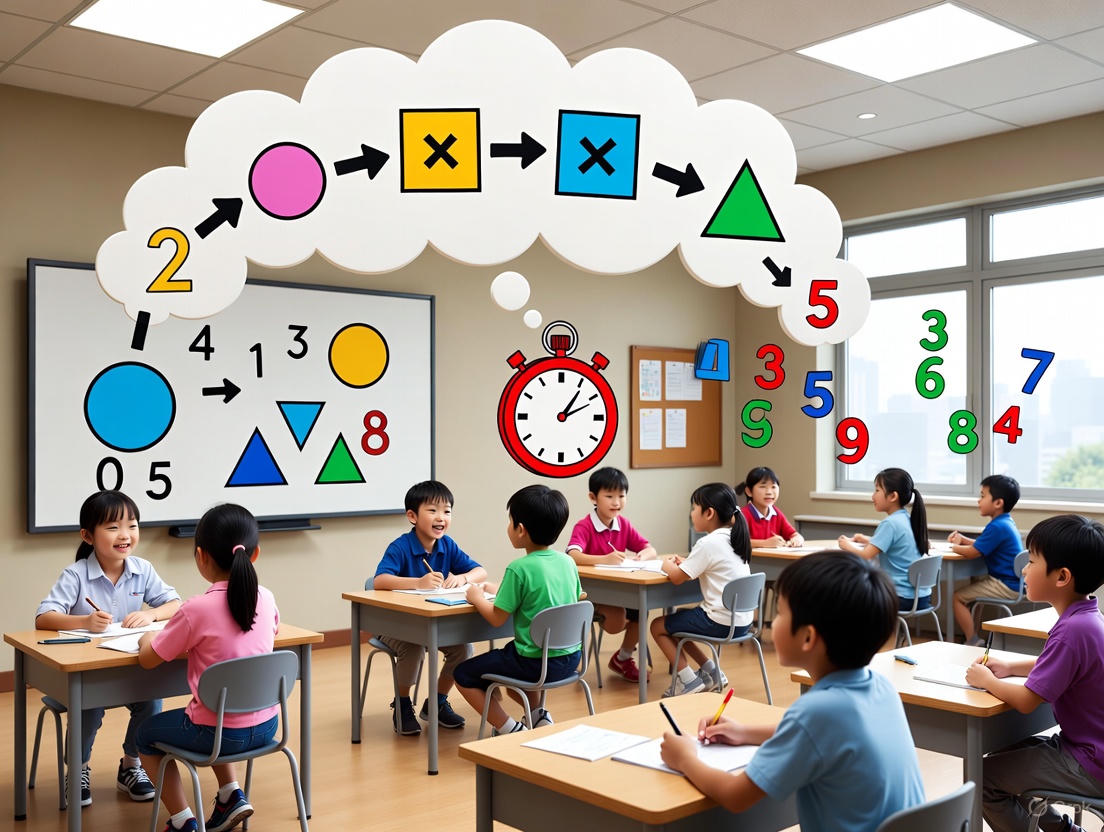
Time is of the essence during any exam, and Singapore Secondary 4 Math is no exception. Analyzing past papers allows students to gauge how much time they typically spend on different question types. This information can then be used to create a realistic time management plan for the actual exam. For example, if you consistently struggle with trigonometry questions, allocate more time to them during the exam. Effective time management ensures that students can attempt all questions and maximize their chances of scoring well. Don't "chop-chop" do everything, plan properly lah!
Ultimately, the goal of past paper analysis is to inform a strategic revision plan. By identifying recurring question patterns, understanding concept applications, analyzing errors, and managing time effectively, students can tailor their revision to address their specific needs. In Singapore's bustling education scene, where learners face significant demands to excel in mathematics from primary to advanced levels, finding a learning center that merges expertise with true zeal can bring a huge impact in fostering a passion for the subject. Enthusiastic educators who extend beyond rote memorization to inspire analytical problem-solving and resolution abilities are rare, but they are essential for aiding students tackle obstacles in topics like algebra, calculus, and statistics. For guardians seeking similar committed assistance, PSLE math tuition emerge as a example of dedication, driven by teachers who are deeply involved in individual learner's progress. This unwavering dedication turns into tailored lesson strategies that adjust to individual requirements, culminating in improved scores and a enduring respect for math that reaches into prospective academic and professional endeavors.. This might involve focusing on weaker areas, practicing specific question types, or refining problem-solving techniques. A strategic revision plan ensures that students are well-prepared and confident on exam day, ready to tackle any challenge that comes their way. This is how to excel in Singapore Secondary 4 Math, confirm plus chop!
Alright, parents and students, listen up! Secondary 4 is a crucial year, no pressure lah, but it really sets the stage for your future. And in Singapore, acing your exams, especially 'O' Level Math, is like your golden ticket. Think of it as leveling up in a super important game – the game of life! With AI becoming more and more prevalent, a strong foundation in mathematics is no longer just an advantage; it’s practically a superpower!
Think of past year papers (PYPs) as your kiasu (afraid to lose out) secret weapon. They're not just about practicing; they're about understanding the exam inside and out. It's like knowing the enemy before you go to war, kena (get) what I mean?
Subtopic: Time Management is Key, Leh!
One of the biggest challenges in exams is finishing on time. PYPs help you simulate exam conditions, so you learn to allocate your time wisely. In this island nation's intensely competitive scholastic setting, parents are dedicated to supporting their kids' excellence in key math examinations, beginning with the foundational obstacles of PSLE where analytical thinking and abstract understanding are evaluated rigorously. As pupils move forward to O Levels, they come across further complex subjects like geometric geometry and trigonometry that necessitate accuracy and logical abilities, while A Levels present advanced calculus and statistics requiring profound comprehension and usage. For those dedicated to providing their kids an academic advantage, locating the tuition customized to these syllabi can change learning experiences through focused approaches and expert perspectives. This effort not only elevates exam results over all stages but also instills permanent numeric mastery, creating routes to elite schools and STEM professions in a knowledge-driven marketplace.. Don't spend 30 minutes on one question! Learn to identify those tricky ones and come back to them later. It's all about strategy, hor?
Fun Fact: Did you know the Singapore education system consistently ranks among the top in the world? It's partly because we take exam preparation very seriously!
Look, textbooks are important, but they're not the only answer. Here's the deal on how to excel in Singapore Secondary 4 Math:
Understand the Concepts, Not Just Memorize: Rote learning might get you through some questions, but it won't help you tackle those tricky application-based problems. Focus on why the formulas work, not just how to use them.
Practice Makes Perfect (Seriously!): This isn't just some saying. The more you practice, the more comfortable you'll be with different types of questions. Past year papers are your best friend here.

Seek Help When You Need It: Don't be shy to ask your teachers, tutors, or even your classmates for help. It's better to clarify your doubts early than to struggle alone.
Stay Organized: Keep your notes, worksheets, and past papers organized. A cluttered workspace leads to a cluttered mind.
Take Breaks: Studying non-stop will only lead to burnout. Take regular breaks to relax and recharge. Go for a walk, listen to music, or just chill with your friends.
Interesting Fact: Singapore's emphasis on mathematics education dates back to its early years of independence, recognizing its crucial role in economic development.
Don't just accept formulas at face value. Question them! Understand their derivation. This deeper understanding will make you more confident and adaptable when faced with unfamiliar problems. This is especially important with the rise of AI. Understanding the underlying mathematical principles will allow you to leverage these technologies effectively.
History Moment: The Cambridge Examinations Syndicate has been conducting examinations in Singapore for over a century, shaping the academic landscape and setting high standards for education.
Alright, parents and Sec 4 students, listen up! Feeling the pressure cooker heat up as exams loom? Don't say bo jio! We're diving deep into a secret weapon that can seriously boost your scores: past exam papers. But not just blindly doing them, lah. We're talking about dissecting them like a pro, understanding the patterns, and mastering your time like a true-blue Singaporean hustler. In the Lion City's competitive scholastic scene, parents devoted to their kids' success in math often focus on understanding the organized advancement from PSLE's fundamental problem-solving to O Levels' complex subjects like algebra and geometry, and further to A Levels' advanced principles in calculus and statistics. Keeping updated about program revisions and test guidelines is essential to delivering the right assistance at each stage, guaranteeing students build self-assurance and achieve outstanding performances. For official information and resources, visiting the Ministry Of Education - MOE site can offer useful news on regulations, curricula, and learning methods tailored to national benchmarks. Connecting with these credible content strengthens households to align home learning with institutional standards, cultivating long-term progress in math and further, while remaining updated of the most recent MOE programs for comprehensive learner advancement.. This is how to excel in Singapore Secondary 4 Math, and it's your ticket to acing those crucial exams.
Think of past papers as your personal fortune teller, revealing the secrets of the exam. They show you what topics are hot, how questions are usually phrased, and the level of difficulty you can expect. It's like having the kiasu advantage, knowing what's coming before it even arrives!
Fun Fact: Did you know that the Singapore education system consistently ranks among the top in the world for mathematics? That's because we believe in structured learning and rigorous practice, and past papers are a key part of that!
Here's the deal: don't just casually work through past papers while Netflix is playing in the background. Create a real exam environment. Find a quiet space, set a timer, and ban all distractions (yes, that includes your phone!). This is crucial for honing your time management skills and building exam stamina. Treat every practice session like the real thing, and you'll be surprised how much calmer you feel on exam day. This is how to excel in Singapore Secondary 4 Math and other subjects too!
Time is precious during exams. Learn to allocate your time wisely across different sections. Identify the questions you can solve quickly and tackle those first to build momentum and confidence. Don't get bogged down by a single question; if you're stuck, move on and come back to it later. Remember, every mark counts! This is an essential part of mastering exam pacing and how to excel in Singapore Secondary 4 Math.
Interesting Fact: The concept of exams dates back to ancient China, where they were used to select officials for the imperial bureaucracy. Talk about high-stakes testing!
The real magic happens after you've completed a past paper. Don't just check your answers and move on. Take the time to thoroughly analyze your mistakes. Understand why you got them wrong and identify any recurring patterns. Did you misread the question? Did you make a careless calculation error? Did you lack the necessary knowledge or understanding? By understanding your weaknesses, you can focus your revision efforts on the areas that need the most improvement. This is critical for how to excel in Singapore Secondary 4 Math.
History Lesson: The Singapore education system has evolved significantly since its early days. From a focus on basic literacy, it has transformed into a world-class system that emphasizes critical thinking, problem-solving, and innovation – all skills that are essential for success in the 21st century.
Now, let's talk about the bigger picture. In today's world, with AI technologies becoming increasingly prevalent, mathematical skills are more important than ever. Whether you're interested in pursuing a career in engineering, finance, data science, or even the arts, a strong foundation in mathematics will give you a significant advantage. AI is built on algorithms and mathematical models, so understanding these concepts will help you to not only use AI tools effectively but also to create them. Learning how to excel in Singapore Secondary 4 Math is not just about passing exams; it's about preparing yourself for a future where mathematical literacy is a must-have skill.
So, chiong ah! Grab those past papers, put these tips into practice, and get ready to conquer those exams. Remember, with hard work and the right strategies, you can achieve anything you set your mind to. Good luck, and may the odds be ever in your favor!
Alright, parents and Sec 4 students, let's talk about acing that Math exam. We know the pressure is on. Your kids are facing the crucial O-Levels, and let's be honest, Math can be a real make-or-break subject. But don't worry, lah, we've got some insider tips to help you navigate the exam landscape like a pro. This is about how to excel in Singapore Secondary 4 Math, and we're going to break it down, step-by-step.
Think of Math as the foundation for… well, everything! Especially with all this AI stuff going around. Knowing your stuff in Math isn't just about getting a good grade; it's about setting your child up for future success in university and beyond. Engineering, finance, data science – these fields are practically screaming for people with strong mathematical skills. So, yes, it's important!
Okay, so you've got a stack of past year papers staring back at you. Don't panic! This isn't just about blindly doing questions. It's about understanding why certain questions appear, how they're marked, and what the examiners are really looking for. Past exam paper analysis is a critical study method to help students excel in Singapore Secondary 4 Math.
Fun fact: Did you know that the Singapore Math curriculum is consistently ranked among the best in the world? It's true! We're known for our rigorous approach, and that's something to be proud of. But it also means we need to be smart about how we prepare.
The official marking schemes are your secret weapon. Seriously. Forget just checking if your answer is right or wrong. Look closely at how the marks are allocated. In recent times, artificial intelligence has overhauled the education sector worldwide by enabling customized instructional paths through responsive algorithms that tailor material to personal learner speeds and methods, while also mechanizing assessment and administrative responsibilities to free up instructors for more impactful connections. Globally, AI-driven platforms are closing academic shortfalls in remote areas, such as employing chatbots for language mastery in developing nations or analytical insights to identify vulnerable learners in the EU and North America. As the incorporation of AI education builds speed, Singapore shines with its Smart Nation project, where AI applications enhance curriculum tailoring and equitable instruction for multiple demands, covering adaptive learning. This method not only enhances assessment outcomes and engagement in local institutions but also matches with international initiatives to cultivate ongoing learning abilities, equipping learners for a innovation-led society amid principled considerations like information privacy and fair availability.. Where are the method marks? Where are the accuracy marks? This will tell you exactly where to focus your efforts. Learn how to excel in Singapore Secondary 4 Math by understanding the marking scheme.
Presentation matters! Examiners are marking hundreds of papers. Make it easy for them to give you marks. Here's how:
Past papers aren't just for practice; they're a goldmine of information. They reveal patterns, common question types, and the overall difficulty level of the exam.
Interesting fact: The Singapore Examinations and Assessment Board (SEAB) actually releases past year papers for students to use. They understand the importance of practice and preparation!
Go through several past papers and identify the recurring question types. Which topics are most frequently tested? This will help you prioritize your revision. Are you consistently struggling with trigonometry? Maybe it's time to spend a little more time on that topic. This is a great way to learn how to excel in Singapore Secondary 4 Math.
Once you're comfortable with the content, start doing past papers under exam conditions. Time yourself. Don't use any notes or textbooks. This will help you build your speed, stamina, and confidence. Remember to stay calm and focused, even if you encounter a difficult question.
This is perhaps the most important step. Don't just brush off your mistakes. Analyze them carefully. Why did you make the mistake? Was it a lack of understanding? A careless error? A misinterpretation of the question? Once you understand the root cause of your mistakes, you can take steps to prevent them from happening again.
History Snippet: The emphasis on rigorous testing in Singapore's education system has its roots in the country's early years of independence, when the government recognized the need to develop a highly skilled workforce to compete in the global economy.
So, there you have it! By understanding the marking scheme and using past papers strategically, you can help your child (or yourself!) ace that Math exam. Remember, it's not just about memorizing formulas; it's about understanding the concepts and applying them effectively. Can or not? Can one, lah!
After attempting past papers, meticulously review your answers and identify recurring error patterns. Note whether you consistently misapply formulas, make calculation mistakes, or misunderstand concepts. Addressing these patterns will lead to significant improvement.
Begin by identifying the key topics and concepts that are frequently tested. Scan through several years of past papers, noting the recurrence of specific topics. This will help you prioritize your revision efforts, focusing on areas with the highest yield.
Use past papers to simulate exam conditions and practice time management. Allocate specific time slots for each question. This helps you identify areas where you struggle with speed and accuracy, allowing you to refine your pacing strategies.
Different question types require different problem-solving approaches. Analyze the types of questions asked, such as algebraic manipulations or geometric proofs. Understanding the question format allows you to practice specific strategies and improve your response accuracy.
Alright, parents and students, let's talk about acing those Secondary 4 exams, especially the chiobu of all subjects: Math! In this AI age, mastering mathematics isn't just about passing exams; it's about future-proofing your child's career and giving them a serious edge. Think about it – algorithms, data analysis, coding… it all boils down to math!
Forget kiasu cramming! The real secret weapon for exam success is past paper analysis. It's like having the exam paper's blueprint before you even step into the hall. Here's the lowdown:
Fun Fact: Did you know that the Singapore education system is consistently ranked among the best in the world? This emphasis on academic excellence is why mastering subjects like Math is so crucial for your child's future.
Okay, let's get down to the nitty-gritty. Here's how to really excel in Singapore Secondary 4 Math:
Subtopic: Structuring Your Revision with Past Paper Insights
Interesting Fact: The Singapore Math curriculum is renowned for its emphasis on problem-solving and critical thinking. This approach equips students with the skills they need to succeed in a rapidly changing world.
Let's be real, sometimes a little extra help can go a long way. Here's how tuition can complement your child's revision:
History Snippet: The rise of tuition in Singapore reflects the high value placed on education and the desire to provide children with the best possible opportunities. It's a cultural phenomenon, lah!
By strategically integrating past paper analysis, focused revision, and targeted support, your child can confidently tackle those Secondary 4 exams and unlock a brighter future. Don't just study hard, study smart! Jia you!